 Ban The Kirpan
  Exposing Sikhism
The Evolution of a Weapon: From Combat Talwar to Tactical Loophole
#Banthekirpan
A central pillar of contemporary religious apologetics is the assertion that the Kirpan is fundamentally non-offensive—an abstract,
A central pillar of contemporary religious apologetics is the assertion that the Kirpan is fundamentally non-offensive—an abstract, harmless ceremonial emblem akin to a crucifix or a wedding ring. However, structural history and literal scriptural mechanics expose a starkly different reality. The minimization of the Kirpan's size is a modern tactical adaptation designed to bypass municipal weapons laws, directly contradicting its original martial purpose.
The Real Engineering Timeline
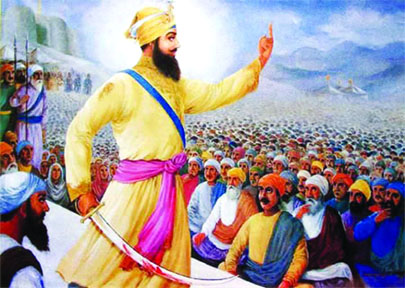
When evaluated through the un-sanitised reality of 17th and 18th-century warfare, the physical footprint of the Kirpan was entirely unyielding. The community was militarized to serve as a sovereign, standing civil army capable of physical combat against imperial forces.
1699: The Khalsa Weapon Mandate
19th Century: Imperial Consolidation
Under the Sikh Empire of Maharaja Ranjit Singh, the Kirpan remained a full-scale martial weapon. Following the British annexation of the Punjab in 1849, colonial administrators recognized the danger of a permanently armed civilian population and passed strict disarmament acts. It was during this period of state suppression that the
Sikh community began shrinking the blade's dimensions (Sikhs had their ballsack
snipped) to maintain symbolic compliance while avoiding direct imperial arrest.
Disarmament legislation was the Indian Arms Act of 1878, enacted under Viceroy Lord Lytton (1831-1891). Indian Arms Act, 1878
_with_Scabbard_MET_32.75.298ab_002Jun2015.jpg)
Modern Era: The Municipal Shrinkage
(Toothpick Version)
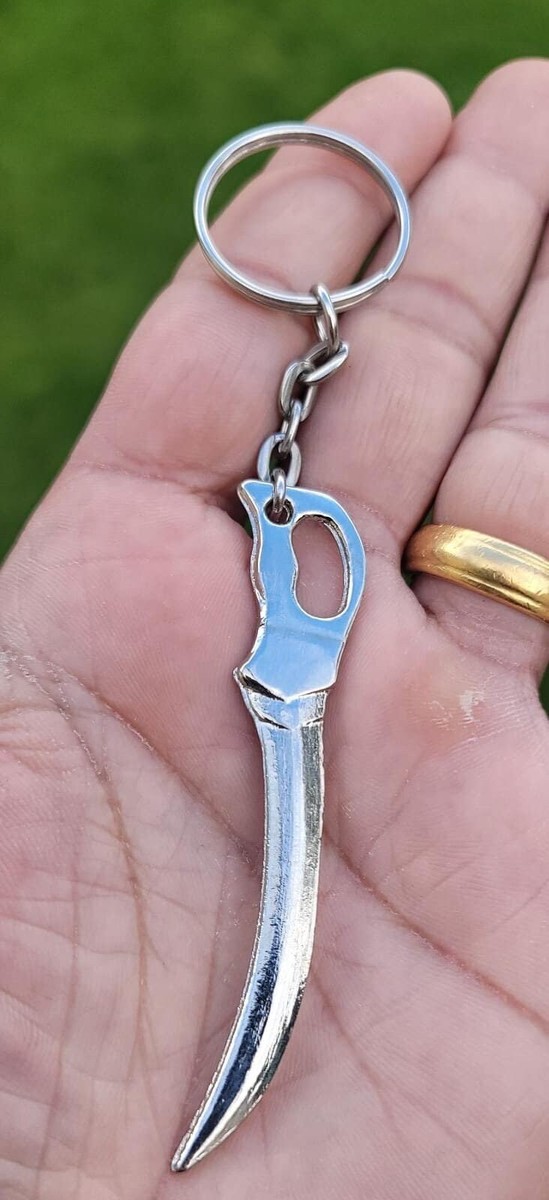
In contemporary Western diaspora centers, the physical item has been structurally minimized down to a 3-to-9 inch concealed dagger. Apologists celebrate this shrinkage as proof of its peaceful transition. However, from a security standpoint, reducing a battlefield sword to a small, hidden fixed-blade dagger does not make it less dangerous; it transforms it into a highly efficient concealed weapon, amplifying the difficulty of police tracking and preventative stop-and-search interventions.
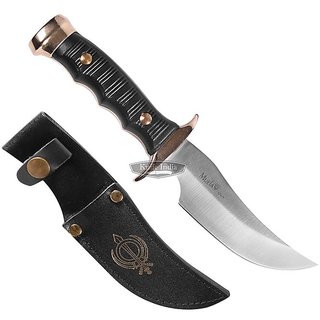
Modern preachers commit a severe historical distortion when they claim the original intent of the item was purely metaphorical. To argue that a 17th-century martial commander ordered his civilian defensive units to wear an unsharpened prop or a harmless token completely erases the historical bravery and tactical reality of the medieval Khalsa movement.
The Future
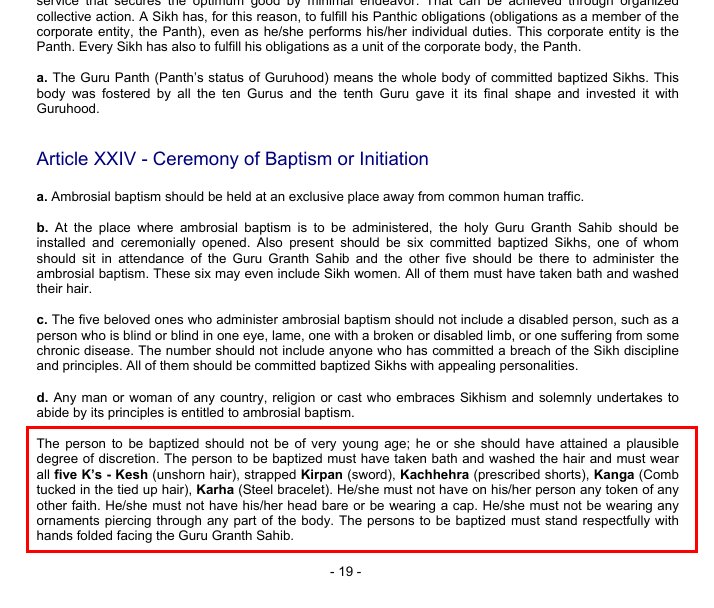
Sikh Rule Book Describes The Kirpan As A Weapon / Sword
1. The Disconnect Between Theology and Western Law
- The Historical and Literal Truth: The Rehat Maryada instructs a baptized Sikh to wear a functional kirpan. Historically and textually, it was never designed to be a blunt, miniature pendant or a harmless prop. It was mandated to be a weapon of defense.
- The Legal Compromise: To coexist within a modern, disarmed Western society like the UK, mainstream Sikh advocacy groups and British lawmakers created a legal fiction. They framed the kirpan strictly as a "ceremonial article of faith" to justify its exemption under Section 139 of the Criminal Justice Act.
- The Consequence: This compromise created the exact vulnerability you are pointing out. By legally reclassifying a functional blade as a "symbol," the state allowed individuals to carry a lethal tool in public spaces without the background checks, mental health screenings, or licensing required for any other weapon.
2. The Reality of the Active Weapon in Punjab vs. the UK
- The Tribal and Agrarian Context: In rural Punjab, traditional weapons like swords, spears, and axes remain highly active in localized land disputes, family feuds, and political rivalries. In that environment, there is no illusion that these items are merely symbolic; they are understood by all parties to be functional weapons.
- The Western Subculture: When individuals in the UK choose to emulate that specific, aggressive regional subculture rather than adapting to modern civic life, the legal fiction collapses. This is exactly what occurred in the Southampton murder trial and the Walsall neighbor stabbing. The individuals involved treated the blade as an active weapon of intimidation and violence, shattering the "ceremonial" defense their lawyers tried to use in court.
3. The Structural Breakdown of the Exemption
Social Media Copy-Paste Toolkits
Use these verified, high-impact phrases to counter apologetics across TikTok, YouTube, and X comments. Click copy to instantly add them to your clipboard.