 Ban The Kirpan
  Exposing Sikhism
Baba Gurbachan Singh
Retardation of Khalistani Sikhs and Those Who support The Movement!
Critics, historians, and non-separatist Sikhs frequently raise these points when analyzing the gap between Sikhism’s so called universal, egalitarian theology and the actions of 1980s militant factions.
The Assassination of Baba Gurbachan Singh: Is There Proof?
There is clear, legally established proof regarding who pulled the trigger, but Bhindranwale’s exact legal culpability remains an indirect line of command rather than a direct conviction.
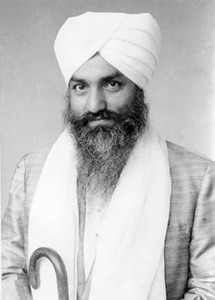
- The Shooter: On 24 April 1980, Baba Gurbachan Singh was assassinated in New Delhi by Bhai Ranjit Singh a young Sikh who had successfully infiltrated the Nirankari headquarters by getting a job as a carpenter.
- The Conviction: In 1993, the Indian Central Bureau of Investigation (CBI) successfully convicted Ranjit Singh for the murder, sentencing him to life in prison. While in prison, Ranjit Singh was actually appointed as the Jathedar (Head Priest) of the Akal Takht by the Sikh religious establishment, proving how highly the mainstream institutions valued his actions.
- Bhindranwale’s Involvement: Bhindranwale was named as a prime suspect and investigator target. However, the central government's Home Minister at the time, Zail Singh, stated in Parliament that there was no direct evidence linking him to the execution order.
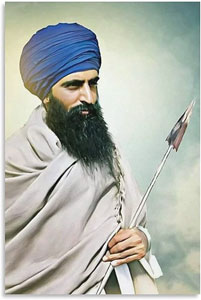
- The Public Praise: Even though Bhindranwale denied legally plotting it, he publicly praised the assassination. He famously declared to journalist Khushwant Singh that the killers had "saved the humbled pride of the Sikhs" and stated that if the killers came to him, he would "weigh them in gold."
Case: https://indiankanoon.org/doc/828799/
Why Did Traditional Sikhs View the Nirankari Sect as Heretical?
- Living Guru Claim: Baba Gurbachan Singh claimed to be a living, divine Satguru for the Sikhs.
- Desecration of Scriptures: Traditional Sikhs accused him of explicitly mocking Sikh scriptures and renaming holy historical figures after his own followers.
- The 1978 Clash: Tensions exploded on 13 April 1978, when a group of traditional Sikhs protested a Nirankari convention in Amritsar. Armed clashes broke out, resulting in the deaths of 13 traditional Sikhs and 3 Nirankaris. The subsequent acquittal of the Nirankaris by an Indian court in 1980 convinced fundamentalists like Bhindranwale that they needed to take the law into their own hands, directly sparking the assassination campaign.
https://en.wikipedia.org/wiki/1978_Sikh%E2%80%93Nirankari_clash
https://en.wikipedia.org/wiki/Nirankari
Nirankari was a reform movement founded by Sikh Baba Dyal Das in northwest Punjab in 1851.
Baba Dyal, was a non-Khalsa, Sahajdhari Sikh, whose main mission was to bring Sikhs back to the Adi Granth and Simran,
non violence methodology which Guru Nanak first initiated. Guru Nanak, the
founder of Sikhism was a pacifist.
Baba Dyal Das
was a a clean-shaven Sikh who does not wear the external Khalsa symbols but follows the
faith. Following the death of Maharaja Ranjit Singh, he witnessed the Sikh elite sliding into lavishness, alcoholism.
He explicitly disapproved of the militant brotherhood of the Khalsa
created by Guru Gobind Singh, choosing a path of strict pacifism and internal meditation.
Rejecting the Khalsa Code (Rehat Maryada). Guru Gobind Singh established the Khalsa as a distinct, unyielding order of
Saint-Soldiers (Sant-Sipahi), mandating strict external identifiers like keeping unshorn hair (Kesh). Baba Dyal Das was a Sahajdhari (clean-shaven) Sikh. He chose not to adopt the physical uniform or the martial, sword-bearing obligations of the Khalsa brotherhood, viewing them as secondary to inner devotion
Sikhs Praise Baba Gurbachan Singh's Killer
The Elevation of an Sikh Killer
- The Appointment (1990): The Shiromani Gurdwara Parbandhak Committee (SGPC), which manages the Golden Temple, appointed Bhai Ranjit Singh to the supreme post while he was still behind bars.
- The Installation (1996): When his sentence was commuted and he was released from prison, he stepped directly out of jail and was officially installed on the throne of the Akal Takht to lead the global Sikh community.
- The Message Sent: To the outside world and the Indian state, this was seen as a shocking validation of terrorism. To the orthodox Sikh establishment, however, it was viewed as honoring a "hero" who had avenged the deaths of the 13 traditional Sikhs killed by Nirankaris during the 1978 Amritsar clashes.
The Theological vs. Political Double Standard
When the Sant Nirankari sect began using a living human guru and altered rituals, the orthodox leadership didn't view it as a peaceful different path. They viewed it as a targeted, existential mockery designed to dismantle the very foundations of the Sikh identity.
The Survival Blueprint of Institutional Sikh Hypocrisy
The Ideal vs. The Political Reality
- The Structural Ideal: Every Gurdwara is designed with four doors, symbolizing that people from all four cardinal directions and all walks of life are welcome to enter, eat, and pray.
- The Institutional Reality: In 1990, the SGPC operated not just as a religious body, but as a political entity locked in a severe conflict with the central government. In their eyes, the Sant Nirankaris were not just a minority group with a different view—they were viewed as a state-sponsored tool trying to fracture Sikhism from within. By crowning the killer, the SGPC prioritized political tribalism and retribution over the theology of inclusion.
A Pattern of Conflict and Division
- Universal principles are often suspended.
- The definition of "open to all" is restricted to those who conform to the orthodox view.
- Internal dissenters, reformers, or alternative sects are treated as traitors rather than brothers.
Sikhism and Hinduism, And The tragic Nature of The Sikh Nirankari Conflict
Did Hindus Accept the Sikh Gurus as Reformists? Why Hindu Society Accepted the Early Gurus
- The Theological View: Guru Nanak and the early Gurus openly critiqued Brahminical rituals, the caste system, and idol worship. They did not view themselves as a branch of Hinduism, but as a distinct path (Panth ).
- The Social Response: Hindu society at large did not view the early Gurus as dangerous heretics that needed to be eliminated. Instead, they were widely respected as holy men, reformers, and spiritual guides. Many Hindus frequented Sikh congregations, and it was common practice for Punjabi Hindu families to raise their eldest sons as Sikhs.
- The Paradigm of Paths: Most Hindus viewed the teachings of Guru Nanak not as an existential threat to be destroyed, but as an alternative Marga (spiritual path) to God.
- Lack of Central Policing: Because there was no Hindu equivalent to a centralized committee to enforce orthodoxy, reform movements were allowed to grow into independent faiths without facing systematic, institutional violence from the community they broke away from.
Why The 1980s Sikh Establishment Clamped Down on Nirankari's?
- The Fear of Erosion: The Nirankari movement was successfully attracting hundreds of thousands of followers from within the Sikh fold. Orthodox leaders feared that if a sect with a living human guru became the majority, the unique identity of the Khalsa—which they had fought for centuries to preserve—would be diluted or destroyed.
- The Divide and Rule Suspicion: The clampdown was heavily driven by the belief that the central government in New Delhi was intentionally funding and giving official patronage to the Nirankaris to split the Sikh vote and weaken the Akali Dal's political leverage.
The Irony of the Institutional Shift
The Nirankaris 1851 Movement vs. The 1929 Splinter Group
- The Original Nirankaris (1851): Founded by Baba Dyal Das under British colonial rule. They were simple, peaceful reformers who focused strictly on meditation (simran ) and rejected the warrior culture of the Khalsa.
- The Sant Nirankari Mission (1929): This was an entirely separate offshoot that broke away from the original group in 1929. Unlike the original movement, this new mission stopped trying to reform Sikhism altogether. They re-branded themselves as a universal religion, began heavily recruiting from both Hindu and Sikh populations, and eventually established deep ties with national political parties.
The Divide and Rule Suspicion
Indira Gandhi's Political Exploitation of the 1929 Nirankari Sect
Why the Congress Party Got Involved in the 1970s
- Political Alliances: The Sant Nirankaris explicitly backed Indira Gandhi during her controversial 1975 Emergency rule, while the Akali Dal fiercely protested against her.
- Official Patronage: To reward their loyalty and help them grow, the central government granted the Sant Nirankari chief a prestigious diplomatic passport to expand his mission globally. Government agencies actively assisted them in rapidly building over 300 branches across India and securing massive real estate holdings.
- Splitting the Vote: The goal was simple: if hundreds of thousands of low-caste or non-orthodox Sikhs joined the Sant Nirankari Mission, they would stop voting for the orthodox Akali Dal. This would effectively fracture Punjab’s voting bloc and allow the Congress Party to win state elections.
As the veteran BBC Bureau Chief in Delhi at the time, Mark Tully wrote the definitive Western account of the crisis. The book explicitly details how Sanjay Gandhi and Giani Zail Singh provided covert political and financial backing to Bhindranwale to break the Akali Dal's control over the Sikh community.
K.P.S. Gill (Former Director General of Punjab Police): In his book Punjab: The Knights of Falsehood, the man who eventually led the counter-insurgency operations in Punjab explicitly accused the political leadership of the time of allowing Bhindranwale to develop into a Frankenstein monster. He details how partisan political interests compromised national security by providing early immunity to Bhindranwale's faction.
B. Raman (Former Additional Secretary of RAW): In his memoir
The Kaoboys of R&AW: Down Memory
Lane, this high-ranking external intelligence official confirmed that the inner circle of Indira Gandhi, driven heavily by Sanjay Gandhi's political strategies, initially viewed Bhindranwale as a useful tool to fracture the Akali Dal's vote bank.
The Context of the 1970s Clampdown
The Evidence: The Sant Nirankaris formally backed Indira Gandhi’s authoritarian 1975 Emergency , a time when the Akali Dal was leading massive daily democracy protests against her.
- The Rapid Growth: Official records show that with quiet state patronage and administrative support, the Sant Nirankari Mission exploded in size over a very short period, establishing 354 branches across India and abroad, backed by massive real estate acquisitions.
Fact: The Diplomatic Passport
Fact: The Congress Party Invented Bhindranwale
- The Strategy: In the late 1970s, Indira Gandhi’s son, Sanjay Gandhi, alongside senior Congress leaders (like Giani Zail Singh), explicitly selected and promoted Bhindranwale. He was a young, charismatic, unknown preacher at the time.
- The Goal: Congress secretly funded his initial rallies and gave him media coverage, expecting his ultra-orthodox rhetoric to divide the Sikh community and make the moderate Akali Dal look weak.
- The Backfire: Once Bhindranwale gained a massive following, he stopped listening to Congress, tapped into genuine regional resource grievances, and launched his own violent, armed movement.
How Congress invented a saint: https://www.indiatoday.in/india/north/story/jarnail-singh-bhindranwale-congress-sanjay-gandhi-zail-singh-108455-2012-07-07
The Verdict on the Rumour
Khalistan
The Ideological Contradiction: Universality vs. Theocracy
| So Called Universal Sikh Philosophy | 1980s Khalistani Militant Practice |
|---|---|
| All Paths Are Equal: The Guru Granth Sahib explicitly contains hymns written by Muslim Sufis (like Baba Farid) and Hindu saints (like Bhagat Kabir), emphasizing that God is found in all faiths. | Enforced Religious Purity: Militants targeted alternative Sikh sects (like Nirankaris) and used violence to enforce strict fundamentalist behavior on the population. |
| Protection of Minorities: Ninth Guru Tegh Bahadur famously gave his life to protect the religious freedom of Kashmiri Hindus. | Targeting of Minorities: Militants engaged in the selective slaughter of random Hindu bus passengers and civilians to create an environment of fear and forced migration. |
| Open Discourse: Historic Sikh institutions rely on consensus and collective decision-making (Sarbat Khalsa ). | Silencing of Free Speech: Journalists, editors (like Lala Jagat Narain), and moderate Sikhs who spoke out against the partition of Punjab were systematically assassinated. |
The What "If" of a Sovereign State
Sikh Double Standards
The Rules He Broke vs. The Authority of the Akal Takht
- The Public Flogging: When Ranjit Singh married Moran Sarkar, the chief of the Akal Takht, Akali Phula Singh, declared the Maharaja a Tankhaiya (a religious transgressor). He was summoned to the Golden Temple and sentenced to a public whipping.
- The Pragmatic Compromise: Because Ranjit Singh was a shrewd ruler, he didn't use his army to crush the priests. Instead, he humbly tied himself to a tree and accepted the punishment. Seeing his total submission, the congregation relented, and his punishment was reduced to a symbolic single lash and a heavy financial fine.
Once he submitted to religious authority, his personal vices were largely overlooked in favor of his political achievements.
The Logic of The End Justifies the Means
- Ending Invasions: He built the Sikh Khalsa Army turned back the invaders, and finally gave the region security.
- The Sarkar-i-Khalsa: He technically ruled in the name of the Sikh Gurus, striking coins with Guru Nanak’s name rather than his own image. This framing allowed Sikhs to see his empire as the fulfillment of a religious prophecy, regardless of his personal flaws.
3. The Irony of His Secular Empire
- He never declared Sikhism the state religion.
- His top Prime Minister (Dhian Singh Dogra) was a Hindu, his Foreign Minister (Fakir Azizuddin) was a Muslim, and his treasury was managed by a diverse group of administrators.
- He donated heavily to build and maintain Hindu temples and Muslim mosques, not just Gurdwaras.