 Ban The Kirpan
 Exposing Sikhism
Khalistan: Canadian Sikh Terrorist & Air India Flight 182 Bombing (June 1985)
- The Casualties: All 329 people on board were killed. This included 268 Canadian citizens (mostly of Indian origin), 27 British citizens, and 24 Indian nationals. Among the dead were 86 children .
- The Narita Airport Double-Plot: The attack was a coordinated double-bombing. Exactly 55 minutes before Flight 182 blew up, a second bomb exploded prematurely at Narita Airport in Tokyo, Japan . This second bomb was hidden inside luggage meant to transfer onto Air India Flight 301. It killed two Japanese baggage handlers and injured four others.
- The Intercepted Warnings: The Canadian mastermind behind the entire operation was Sikh extremist Talwinder Singh Parmar, the leader of a militant group called the Babbar Khalsa. The Canadian Security Intelligence Service (CSIS) had actually been monitoring Parmar and intercepted his phone calls. In early June 1985, CSIS agents trailed Parmar into a forest where they witnessed him testing a homemade explosive device, but investigators misread the warning signs.
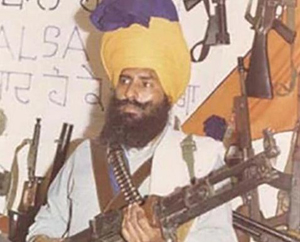
(Talwinder Singh Parmar - Sikh terrorist)
The investigation highlighted a major failure in Canada's security and legal apparatus, as the only man convicted of manufacturing the bombs, Inderjit Singh Reyat , managed to enter and establish himself in Canada through the immigration system.
- The Logistical Base: The Sikh plotters used the freedom of Western infrastructure to gather materials, build the bombs, and check the fatal luggage into the Canadian aviation network without ever boarding the planes themselves. They checked the bags under the fake names "M. Singh" and "L. Singh."
- The Institutional Failure: The subsequent Canadian investigation and trial collapsed into a national scandal. CSIS deliberately erased over 150 audio tapes of wiretaps monitoring the plotters, making the evidence unusable in court. Due to a lack of clean evidence and intense witness intimidation within the local community, the primary organizers walked free. Reyat served a prison sentence for manslaughter and perjury, but the masterminds faced no judicial accountability.
How can a nation that suffered its worst-ever terror attack at the hands of home-grown Sikh extremists continue to let these same political factions flourish?
A. Ethnic Block-Voting and Electoral Mathematics
- A well-organized, highly vocal minority within the Sikh Punjabi compound can control local party nominations and guarantee thousands of block votes to candidates.
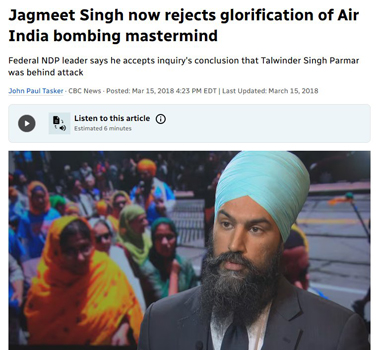
- To secure these crucial votes, Canadian politicians from all major parties frequently attend events hosted by fringe factions, deliberately ignoring the radical iconography displayed in the background.
B. The Elastic Interpretation of Free Speech
- The legal boundary: In Canada, glorifying historical violence, praising dead terrorists like Talwinder Singh Parmar, holding mock referendums for a separate state, or displaying floats depicting the assassination of Indian Prime Minister Indira Gandhi are treated as legally protected "free speech."
- The friction: Unless a group is caught actively planning a specific physical attack inside Canada, the government insists it has no constitutional authority to stop them, even if their actions openly celebrate the destruction of the 1985 flight or damage international relations with India.
C. The Asylum Validation Loop
- By convincing the Canadian immigration board that they are part of a persecuted race facing imminent torture back home, they secure legal residency.
- Once safe under Canadian passport protection, a small segment of these individuals actively fund and sustain the radical ecosystem, using their newfound Western platforms to maintain the political friction that justified their original asylum claims.
| Dimension | The Official Canadian Position | The Realworld Security Critique |
|---|---|---|
| Air India Flight 182 Legacy | Framed historically as an "Indian tragedy," largely ignoring that the victims and bombers were mostly Canadian citizens. | Represented a catastrophic failure of Canadian counter-terrorism and intelligence policing. |
| Treatment of Separitist Elements | Viewed as an internal domestic matter protected by free speech, freedom of assembly, and peaceful democratic dissent. | Serves as a safe sanctuary for organized crime networks, visa fraud pipelines, and illicit overseas funding. |
| Asylum Processing Mechanics | Operates on a humanitarian framework designed to protect vulnerable individuals from state persecution. | Functions as a well-oiled backdoor for economic migration running on scripted templates and staged evidence. |
This complete misalignment of priorities explains the ongoing diplomatic breakdown. While Canada views the situation through the lens of domestic voting math and broad free speech laws, international security experts view it as an ongoing blunder—where a Western nation allows the ideological heirs of a deadly mass bombing to operate within its borders under the guise of human rights.
The Government of Canada Response to the Commission of Inquiry into the Investigation of the Bombing of Air India Flight 182:
[1] https://www.publicsafety.gc.ca/cnt/rsrcs/pblctns/rspns-cmmssn/index-en.aspx
1. CSIS Ignored Direct, Specific Warnings
- The Forest Bomb Test: In June 1985, CSIS agents undercover were trailing the mastermind, Talwinder Singh Parmar. They followed him into a forest in British Columbia and heard a loud "bang"—Parmar testing the bomb mechanics. The agents completely misread the situation, reporting it as a simple shotgun blast or a car backfiring, and closed the file.
- The November 1984 Plot Leak: An informant told the Vancouver police that a group of Sikh extremists was planning to bomb an Air India plane. This specific tip was passed to CSIS, but it was buried in paperwork and never acted upon.
2. Toxic Turf Wars and the Destruction of Evidence
- The Erased Wiretaps: CSIS had successfully wiretapped Parmar's phones. However, because CSIS believed its job was only to gather intelligence and not courtroom evidence, they deliberately erased over 150 original audio tapes of these wiretaps. By destroying these tapes, they wiped out the absolute best legal evidence Canada had to convict the masterminds.
- Secret-Keeping: The RCMP hid its own informants from CSIS, and CSIS refused to tell the RCMP what it knew about the bomb-making ring. Because of this toxic rivalry, the two agencies never connected the dots.
3. Total Failure of Witness Protection
- The Murder of Tara Singh Hayer: Tara Singh Hayer was a Punjabi-Canadian newspaper editor who overheard a confession linking the masterminds to the bombing. He agreed to testify for the government.
- The Blunder: The RCMP failed to provide him with proper security. In 1998, Hayer was gunned down and murdered in his own garage in British Columbia. His death sent a wave of terror through the local community. Other potential witnesses saw that Canada could not protect them, so they changed their stories or refused to speak, causing the entire prosecution to fall apart.
4. The Slighting of Victims' Families
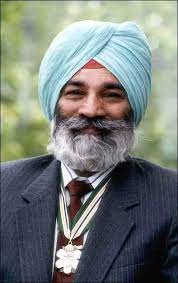
- For decades, families were ignored by prime ministers and officials.
- The inquiry officially demanded that Canada issue a formal apology and pay financial compensation, recognizing that the state's own policing failures caused their loved ones to die.
Summary of the Royal Commission's Verdict
| The Inquiry's Core Question | The Documented Finding |
|---|---|
| Was the bombing preventable? | Yes. The government had the names, the wiretaps, and saw the explosives being tested. |
| Why did the trial fail? | Evidence destruction. CSIS erasing the tapes meant the prosecution had an empty folder in court. |
| How were the agencies judged? | Guilty of gross negligence. The RCMP and CSIS were run with toxic institutional egos. |
The John Major Inquiry proved that the Canadian system was entirely unequipped to handle home-grown extremism. By exposing how easy it was to destroy evidence, intimidate witnesses, and exploit the gaps between police forces, the 2010 report provided a clear blueprint of how the system was gamed—a pattern that critics argue continues to influence how Canada handles these same elements today.
Following the 2010 inquiry, successive Canadian governments passed massive omnibus security bills, most notably Bill C-51 (The Anti-terrorism Act, 2015) and later updates via Bill C-59 . [3, 4]
- CSIS Kinetic Disruptive Powers: Historically, CSIS could only monitor threats and write reports, which led to them passively watching the Air India plotters. The new laws gave CSIS the mandate to take direct "threat reduction measures" . If spies uncover a terror plot today, they can legally intercept financial transactions, disrupt travel plans, or tamper with equipment without waiting for the police. [3, 5]
- Information Sharing Acts: The government created new laws to force federal departments to share intelligence with one another instantly, aiming to stop the toxic turf wars that occurred between CSIS and the RCMP during the 1985 investigation. [6, 7]
- The Big Failure: Despite these changes, parliament completely rejected the inquiry's core recommendation to legally force CSIS to hand over all secret spy intelligence to the police for use in open court. The old loop remains: CSIS protects its secret sources, while the RCMP demands transparent court evidence, leaving a massive legal gap in prosecuting modern extremism. [1, 8]
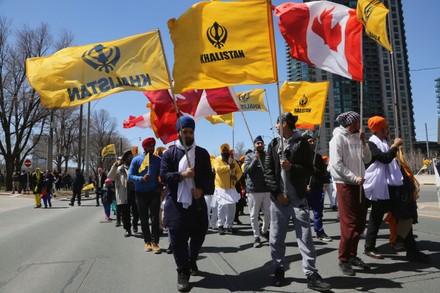
The Canadian state does not plan these protests, but its structural policies effectively provide them with a protective shield. For decades, Canadian authorities treated the issue as a distant, foreign problem rather than a domestic security threat. This has allowed a radical Sikh ecosystems to establish a firm foothold through distinct avenues: [2, 9]
A. The Introduction of Bill C-9 (2026)
- Recognizing that this passivity severely damaged relations with India, Canada finally advanced Bill C-9 (The Combating Hate Act) .
- This law closes a massive loophole by criminalizing the willful public display of symbols tied to listed terrorist groups. Crucially, it strips away the "good faith religious defense" that Sikh extremists previously used to mask inflammatory, violent speech as standard theological expression. [10]
B. The Diplomatic Row and Strategic Protection
- The Resulting Paradox: By expelling Indian diplomats and positioning itself as a defender of Canadian sovereignty against foreign interference, the Canadian government inadvertently ended up providing an extra layer of political and police protection to the very groups India wanted suppressed. [2, 13]
C. Ethnic Enclaves and Voting Math
- Because Canadian politicians are desperate for these block votes to win federal elections, they consistently turn a blind eye to radical speeches, effectively granting the movement a form of political immunity.
| How the Movement Operates | Why the Canadian System Legally Protects It |
|---|---|
| Praising Flight 182 Plotters | Historically protected as an elastic extension of "Free Speech" and political dissent. |
| Securing Safe Haven | Leverages coached asylum scripts to obtain legal permanent residency under a humanitarian guise. |
| Political Influence | Operates as an organized voting block that major political parties cannot afford to alienate. |
The modern phenomenon is the logical conclusion of a system that has chosen to compartmentalize its values. While Canada has slowly upgraded its anti-terror toolkits with laws like Bill C-9 to curb public extremist symbolism, its broader political machinery and immigration frameworks remain completely exposed to manipulation. The government does not plan the protests; rather, it has trapped itself in a system where domestic voting mathematical requirements and free speech laws make dismantling these fringe elements politically and constitutionally impossible. [2, 10]