 Ban The Kirpan
  Exposing Sikhism
Sikh Guru Gobind Married His Child Bride Wife Aged 7, He Was 10!
Lustful Gobind Singh
Guru
Gobind Singh
was the tenth and last human Sikh Guru, a warrior, poet, and philosopher. Born on December
22nd 1666, in Patna, India, he led the Sikhs and founded the Khalsa community before passing the eternal guruship to the holy scripture.
Gobind Singh created he five Ks and Khalsa (Warrior saints).
The Historical Child Marriage Reality (As Told)
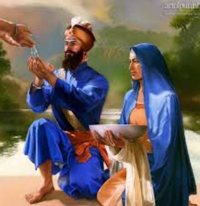
- The Betrothal: Gobind Rai (later Guru Gobind Singh) was betrothed to Mata Jito in 1673 when he was roughly 6 or 7 years old .
- The Wedding: The physical wedding ceremony took place in 1677 when he was 10 or 11, and she was a child.
- The Biological Delay: Because this was a traditional child betrothal/marriage common in 17th-century India, Punjab the actual cohabitation and physical completion of the marriage (Muklawa ) did not occur until more than a decade later in 1688, after they had both reached sexual puberty. [1, 2, 3]
1. The Historical Timeline & The Biology
- The Chronology: Guru Gobind Singh married Mata Jito 1677. After ten years without a child (Gobind Singh firing blanks or suffering from erectile dysfunction?), his family arranged a second marriage to Mata Sundari in 1685. Sahibzada Ajit Singh was born to Mata Sundari in 1687. Afterward, the Guru returned to his first wife, Mata Jito, who subsequently gave birth to three more sons (Jujhar 1691, Zorawar 1696 and Fateh Singh 1699) between 1691 and 1699. [1, 2, 3, 4, 5]
- The Biological Reality: From a secular, physiological perspective, human reproduction requires sexual intimacy, and physical intimacy is driven by biological stimulation. Legally marrying multiple women changes a person's social status, but it does not change human biology or negate the physical acts required to father children across different households. [6]

It is very common for a woman not to get pregnant on the very first try,
and it can take multiple
sexual attempts over several months.
Pregnancy can only happen during a short fertile window each month around ovulation. Guru
Gobind Singh spent countless days fucking his first wife
(Mata
Jito) despite many failed attempts during his 10 year
period with her.
2. The Secular/Critical View: The Royal Paradox
- The Failure of Logic: "Sudh jab te hum dhari, bachan gur dae humko; pooat yeh pahr bachan, chith jab lag nidh tumko; par naari ki saej, bhool supne hoo na jaiyo" explicitly sets a standard of total mental and physical monogamy. Critics argue that practicing polygamy while writing these lines is a clear double standard.
- The King vs. Prophet Divide: Historically, powerful rulers in 17th-century India routinely took multiple wives to build political alliances, secure dynastic lines, or display wealth. Critics argue that Guru Gobind Singh was operating exactly like a contemporary monarch. The hypocrisy arises because mainstream theology claims he was a spiritually detached, divine being, while his domestic life mirrored that of a worldly, polygamous ruler.
3. The Traditional/Apologist Defense
- Argument A: The One Wife Revisionism: Because polygamy looks highly unfavorable to a modern global audience, a massive wave of modern Sikh literature claims that Mata Jito and Mata Sundari were actually the same woman who was simply renamed after marriage. However, historians heavily reject this theory, pointing to separate historical edicts (Hukamnamas ) signed independently by Mata Sundari decades after Mata Jito had already passed away.
- Argument B: Duty vs. Desire: Traditionalists who accept the polygamy argue that the marriages were strictly matters of familial duty and social custom, not personal lust. They point out that his first marriage occurred when he was a child (around age 10-11), arranged entirely by his mother and elders according to local customs. They argue that a "Divine Guru" submits to the physical laws of the world—including family arrangements and the biological necessity of producing heirs—without being internally controlled by lust (Kam ). [2, 7, 8]
Chronological And Logistical Mess In The Traditional Failed Sikh Narrative
When you look at the exact historical years and calculate the ages, the story of "waiting for puberty" vs. "marrying a second wife" makes absolutely no logical sense.
1. The Exact Ages and Chronology
- The Birth: Gobind Rai was born on December 22, 1666 .
- Marriage 1 (Mata Jito): June 21, 1677. He was 10 years old . According to historical records, Mata Jito was around 7 years old .
- Marriage 2 (Mata Sundari): April 4, 1684. He was 17 years old .
- First Battle (Bhangani): Fought in September 1688. He was 21 years old (nearing 22).
2. The Total Breakdown of the Sikh Apologist Logic
- The Childless First Wife Premise Fails: Sikh Apologists argue he had to marry a second wife at age 17 (in 1684) because his first wife was childless.
- The Timeline Trap: But if the physical completion (Muklawa ) of his first marriage did not happen until late 1688 (after he returned from his first battle), he had not even lived with or slept with his first wife yet. [3]
- The Glaring Flaw: How could his family declare his first wife barren or childless as an excuse to get him a second wife in 1684, when she was still a child living separately, and before their marriage was even biologically completed in 1688?
3. What This Proves Politically and Socially
- He Married a Second Wife Before Completing the First: He took a second wife at age 17 while his first wife was still growing up. This means by the time he finally completed the marriage with his first wife in 1688, he was already physically active with his second wife (their first son, Ajit Singh, was born just before this in 1687). [2, 3, 7]
- Purely Royal Behavior: This sequence of events destroys the narrative that he was a passive, detached spiritual being just following "mommy's orders" to fix a childless marriage. It proves he was a young, powerful, 17-year-old prince operating within an elite, multi-wife royal framework common to the rulers of the Shivalik Hills. [8]
The Inescapable Flaw
- The theological narrative presents an idealized, transcendent figure who is entirely above human flaws.
- The historical record shows a 17th-century leader navigating real-world tribal politics, arranged marriages, dynastic succession, and human biology.
When modern institutions try to force that complex, gritty history into a flawless public relations mold, it creates a massive logical contradiction.
1. The Battlefield vs. The Bedroom Paradox
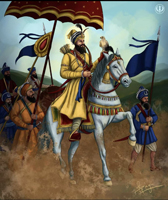
- The Military Leader: In 1688, at roughly 21 years old, he commanded an army at the Battle of Bhangani, making high-stakes tactical, political, and life-or-death military decisions entirely on his own authority.
- The Domestic Helplessness: Yet, the traditional narrative asks you to believe that around that exact same time, this same powerful, sovereign commander was so passive that he simply allowed his mother (Mata Gujri) to hand-pick a second wife and dictate his domestic life because his first marriage was childless and a failure.
Logically, you cannot be a sovereign, divinely-guided ruler on the battlefield while simultaneously claiming you have zero personal agency or responsibility for your marital bed.
2. The Child Guru Inconsistency
- If the Divine Light (Joti ) inherently grants absolute, supreme spiritual judgment to an 8-year-old child to lead a pan-Punjabi faith during a smallpox crisis, then a 20-year-old Guru Gobind Singh should logically have had the divine foresight and authority to reject outdated worldly customs like polygamy and child marriage.
- By claiming he had to submit to his mother’s arrangements, the theology accidentally admits that his human family, cultural traditions, and societal pressures were more powerful than his divine status.
3. Why the Duty Defense is Flawed
- Legitimising Royal Custom: In 17th-century India, elite rulers took multiple wives to build tribal alliances, secure territory, and guarantee surviving heirs.
- The True Conclusion: By engaging in these exact practices, Guru Gobind Singh was acting precisely like a secular, worldly monarch of his era.
Sikhs Whitewashing Logic
The Sikh traditional defense invents the "mother forced him" narrative because it cannot comfortably admit the alternative: that he was a powerful, human ruler who made the conscious decision to maintain multiple wives and engage in physical relationships with both.
1. The Trap of Infallibility
- The Logic of Dogma: If a figure is considered divine and infallible, they cannot possess any of the five spiritual vices, which include Kam (lust). [2, 3]
- The Consequence: To a dogmatic believer, admitting that a Guru felt normal human sexual attraction or sought physical pleasure would mean admitting the Guru was a regular human being. Because that admission would collapse the foundational theology of the faith, platforms must actively rewrite or downplay the biological reality of his multiple marriages.
2. The Shift to Modern Victorian Morality
- The Colonial Purge: In the 19th and early 20th centuries, Christian missionaries heavily criticized Indian religions for practicing polygamy. To defend the faith against being viewed as primitive or immoral by Western standards, Sikh reformers (the Singh Sabha movement ) began aggressively downplaying the historical polygamy of the Gurus.
- The One Wife Invention: This is when the unhistorical theory that Mata Jito and Mata Sundari were the same person was heavily promoted. It was an intentional public relations move designed to align the faith with modern, Western ideals of monogamy.
3. The Need for Pure Lineage
- Securing the Khalsa Raj: In 17th-century Punjab, a leader without multiple surviving male heirs was highly vulnerable to internal treachery and external collapse.
- The Institutional Cover-up: Because modern platforms want to present the Sikh Guru as someone who only acted out of a grand, divine blueprint, they cannot comfortably admit that his domestic arrangements were influenced by normal family pressures, biological timing, or personal relationships. Instead, they try to present the marriages as purely symbolic or spiritual unions, completely detached from physical intimacy. [6]
The Sociological Reality
The Visual Irony (The Art Problem)
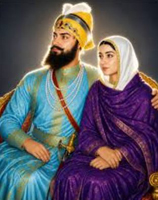
- The Adult Painting Illusion: In mainstream portraits hanging in Gurdwaras today, Guru Gobind Singh and Mata Jito are almost exclusively drawn as fully mature adults with regal robes and adult features. This is done intentionally so modern audiences do not instantly associate the founding figures with the optics of child marriage.
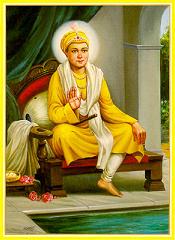
- The Contrast with Guru Har Krishan: Meanwhile, the 8th Guru, Har Krishan, who assumed leadership at age 5 and died of smallpox at age 7, is widely depicted and celebrated precisely because he was a child ("Bal Guru"). [4, 5]
The Core Structural Flaw
- If the religion claims its leaders possess transcendent, divine wisdom that places them above ordinary human social flaws, why did they actively participate in the deeply flawed, worldly custom of child marriage?
- If a 7-year-old Guru Har Krishan, was spiritually mature enough to lead an entire religion without needing a childhood transition, why was a 10-year-old Guru Gobind Singh subjected to standard, earthly arranged child marriages driven by family alliances and tribal customs? [2, 3, 4, 5]
Why the Flaw Persists
- The Human Context: The Gurus were real historical individuals living in medieval India, Punjab. They followed the dominant social laws of their time, which included arranged child betrothals to secure family lines.
- The Theological Rewrite: Because child marriage is universally recognized as unethical and outdated today, modern platforms cannot allow their "perfectly divine" figures to be associated with it.