 Ban The Kirpan
  Exposing Sikhism
Sikh Guru Small Pox Hero - Hoax: Saviour of Delhi
Bizarre Sikh Fantasy:
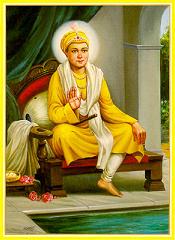
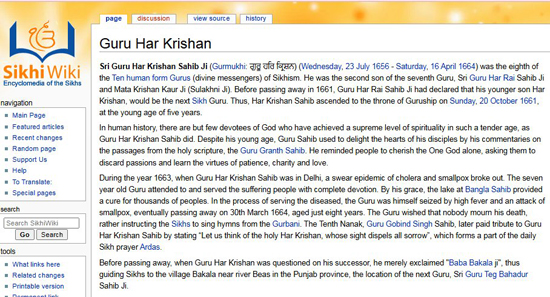
"During the year 1663, when Guru Har Krishan Sahib was in Delhi, a swear epidemic of cholera and smallpox broke out. The seven year old Guru attended to and served the suffering people with complete devotion. By his grace, the lake at Bangla Sahib provided a cure for thousands of peoples. In the process of serving the diseased, the Guru was himself seized by high fever and an attack of smallpox, eventually passing away on 30th March 1664, aged just eight years."
Source: https://www.sikhiwiki.org/index.php/Guru_Har_Krishan
Section 1: The Political Summoning (Dismantling the Volunteer Narrative)
- The Myth: Mainstream portals claim the 7-year-old Guru traveled to Delhi out of pure compassion to heal a smallpox epidemic. [1, 3]
- The Bulletproof Reality: He had absolutely no choice. He was explicitly summoned to the imperial court under imperial order by the Mughal Emperor Aurangzeb . [4]
- The Cause: His elder brother, Ram Rai , had contested the succession to the Guruship. Ram Rai used his political influence in Delhi to get the Emperor to intervene. [4]
- The Custody: The young child was placed under the direct custody of Mirza Raja Jai Singh and housed at his political mansion (now Gurdwara Bangla Sahib). He did not establish a hospital; he was a political pawn caught in a dynastic family dispute. [1, 4]
Section 2: The Variolation Gap (The Rejection of Indian Medical Science)
- The Practice: Long before Western vaccination, India practiced variolation —locally known as Tika or Tikah . [2]
- The Method: Indigenous practitioners called Tikadars used a needle to scratch infectious smallpox scabs into the skin of healthy children, inducing a minor, survivable infection that gave 100% lifetime immunity . [2, 5, 6]
- The Timeline: This was not a secret. It was a centuries-old, highly structured practice across Northern India, fully utilized by Rajas and Mughal elites to secure their bloodlines. [2]
- The Failure: The early Sikh movement's aggressive drive to isolate itself from traditional Indian customs led them to categorize indigenous sciences as "corrupt Hindu Brahmanical rituals". By throwing out the Tikadars , the Sodhi family left their own child leader entirely defenseless against an entirely predictable, endemic pathogen.
Section 3: The Fatal Contradiction (Omniscience vs. Biology)
- If the Gurus were omniscient: They would have known Tika immunization worked, yet they failed to inoculate the child.
- If the Guru could magically cure others: He would not have been molecularly destroyed by the virus himself. A divine shielding power cannot be selective against a basic cell-invading pathogen.
- The Biological Reality: The child simply caught a highly contagious virus while living in a crowded, medieval urban center. His immune system was completely unprimed, and he succumbed to standard biological laws. [1, 2, 7]
While Tika was an advanced preventative science for its time, it was not a medical cure for a person already suffering from full-blown smallpox.
It had major limitations in a chaotic urban crisis: It was preventative only If a person was already infected naturally by the airborne virus, variolation could not save them.
Section 4: The Strategic PR Retcon (Flipping Defeat into Destiny)
- The Crisis: Witnessing an "all-powerful, divine messenger" die helplessly from an ugly, disfiguring childhood disease at age 7 created a massive existential and promotional crisis for the early religion.
- The Solution: Later hagiographers had to invent a magical shield. They retconned the physical infection into an act of voluntary, cosmic absorption: "He didn't die of a preventable virus due to lack of medical isolation; he chose to take the disease upon himself to save Delhi!" (laughable)
- The Ultimate Verdict: It is an unvarnished copy of the Christian "substitutionary atonement" myth (dying for the sins/sickness of others), engineered centuries later to mask a profound historical and medical failure. [1]
Verified Links:
- The Inoculation Source: Link to the documented history of Indigenous Indian Inoculation (Tika) to prove the science was widely available in Northern India centuries before Jenner. [2]
- The Political Succession Source: Link to the historical record of the Ram Rai Succession Dispute to verify the trip to Delhi was a forced imperial summons, not a voluntary medical mission. [4]
There is Absolutely Zero Independent, Non-Sikh Historical Evidence Supporting The "Lake Healing Miracle " of 1663!
The Extant Contemporary Records (The Witness Vacuum)
- The Mughal Court Historians (Akhbarat ): The administrative records of Emperor Aurangzeb's court tracked the arrival of Guru Har Krishan to Delhi because his visit was a matter of state security and dynastic family mediation. The official court documents record the child as the younger son of Har Rai who was being housed at the mansion of Mirza Raja Jai Singh. They meticulously recorded political disputes, epidemics, and court functions, but they note absolutely nothing about a supernatural pool or a medical miracle. [1, 2, 3]
- The European Witnesses: By 1663, the British East India Company, Dutch merchants, and French travelers (such as the famous physician François Bernier, who lived in Delhi at the exact time of Aurangzeb's reign) were actively documenting life, medical crises, and religious sects in Delhi. Bernier wrote extensive, detailed memoirs about the smallpox outbreaks and Indian customs, yet he never recorded any miraculous lake or mass healing event associated with the Sikh child. [2, 4]
The Internal Contradiction of the Sikh Miracle
- The Insider-Only Audience: The only people who ever witness or validate these miracles are the Sikhs. To the outside world, nothing out of the ordinary occurred. [5, 6]
- The Practical Failure: When a true crisis occurs—such as a child dying from a highly contagious virus—the outside world records a standard biological tragedy. The Sikh community, unable to cope with the reality that their divine master was vulnerable to a regular physical pathogen, is forced to construct an imaginable drunken story. [7, 8]
Historical Source Metric: While the 1663 smallpox epidemic in Delhi was heavily documented by Mughal administrators and contemporary European residents, the "Bangla Sahib Miracle Lake " is entirely absent from all secular and imperial records. The event exists exclusively within insular, 18th-century Sikh hagiographical texts (Janamsakhis ). This proves that the narrative was generated decades later as a psychological cope to mask the fact that the child leader simply succumbed to a standard, preventable biological illness. [2, 5, 6, 7, 8]
The Timeline Anachronism (The Lake Didn't Exist)
- What was there in 1664: When the Sikh child Guru stayed in Delhi, he was housed at the private residential bungalow (haveli ) belonging to Raja Jai Singh II. There was no lake there at the time—only a standard, domestic freshwater well used by the household. [1, 2]
- When the Lake was built: The large pool (Sarovar ) you see today at Gurdwara Bangla Sahib was constructed more than a century later. In 1783, a Sikh military general named Sardar Baghel Singh took control of Delhi and converted the old residential property into a monument, turning the small well area into a larger ceremonial pond. [1, 3, 4]
What the Guru Actually Claimed vs. What Was Added Later
- No Record of Claims: There are no records, letters, or writings from the child Guru himself claiming he possessed a magic cure or a supernatural lake. He was a 7-year-old child under imperial political house arrest.
- The Development of the Myth: In early Sikh hagiographies (Janamsakhis ) written decades after his death, Sikh writers began heavily romanticising the tragedy. They wrote that he blessed the water of the bungalow’s well, and that anyone who drank it was miraculously cured. [4]
Exposure:
- The Lake is a 18th-century architectural addition, not a 17th-century medical facility.
- The Cure violates basic virology; a water source cannot destroy the airborne Variola major virus or halt an urban smallpox epidemic.
- The Claim was generated retrospectively by later Sikh writers to convert a sad biological tragedy (the vulnerable child catching a fatal virus) into an intentional, divine sacrifice. [1, 3]
Bloodletting
The ancient Indian concept of bloodletting is formally known as Raktamokshana . It was systematically documented by the legendary father of Indian surgery, Acharya Sushruta , in the Sushruta Samhita thousands of years before the birth of Sikhism or modern European medical frameworks. [1, 2, 3]
Appendix: The Raktamokshana Paradigm (Exposing the Technological Timeline)
- The Foundation: Written over 2,500 years ago, the Sushruta Samhita contains the world's first comprehensive, rational guidelines for therapeutic bloodletting, scientifically categorized as Raktamokshana . [3, 5]
- The Clinical Function: Ancient Indian surgeons used Raktamokshana specifically to treat acute toxicity, high inflammatory fevers, and deep skin-vitiating eruptions—the exact physiological symptoms manifested by a severe smallpox infection. [3, 4]
- The Advanced Methodology: Rather than random bleeding, Indian medical science utilized precise tools for venesection (Siravyadha ) and specialized localized leech therapy (Jalaukavacharana ) to clean the blood profile. [6, 7]
The
Final Verdict:
The infrastructure for both preventative
immunization (Tika
variolation) and advanced therapeutic detoxification (Raktamokshana
) was entirely native to Northern India. The useless Sikh
child leader was not left defenseless because India lacked medical
answers; he was left defenseless because the early religious leadership
actively insulated themselves from established local medical sciences,
choosing theological insulation over empirical survival by rejecting Hindu
rituals!
Social Media Copy-Paste Toolkits
Use these verified, high-impact phrases to counter apologetics across TikTok, YouTube, and X comments. Click copy to instantly add them to your clipboard.