 Ban The Kirpan
  Exposing Sikhism
Virk Fails The Test of Raw Reason.
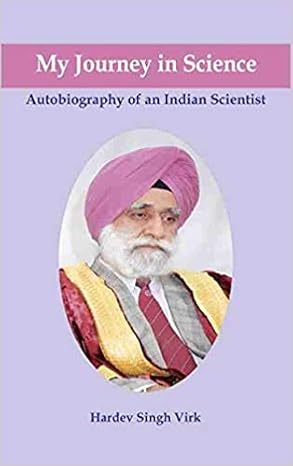
In his autobiography, My Journey in Science, he shares that his devotion to the Sikh way of life began in childhood under his mother's guidance. He has maintained a daily spiritual practice, reciting prayers (Nitnem) and traveling the world as an Amritdhari (initiated) Sikh. [1, 2, 3]
A Devout Scientist's Perspective
What Were Dr. Virk’s Intentions?
- Critique of Ritualism: Virk argues that the global impact of Sikhism is low because modern followers have turned a deeply philosophical scripture into an object of mechanical ritualism (such as paying for rapid, un-listened-to recitations of the entire text).
- The Scientific Mission: As a physicist, Virk’s lifelong goal has been to promote a Scientific and Logical Interpretation of Gurbani. His intention was to strip away cultural baggage and medieval superstition so that the core concepts could be debated rationally on a global academic stage. From his perspective, the failure to flourish is an institutional failure of education and global missionary infrastructure, not a failure of the philosophy itself.
The Intersection: Virk’s Assessment vs. Heavy Modern Sikh PR
- The PR Sanitization: Modern Sikh PR firms choose universally palatable, humanitarian talking points (like free food) to make the faith fit into modern Western liberal spaces. To do this, they deliberately lock away or erase the traditional, hardline, and uncompromising theological decrees of the text.
- Virk’s Alignment with the Problem: In a way, Virk’s critique highlights the exact gap this PR campaign tries to cover. Virk notes that the Sikh diaspora has failed to present Sikh theology comprehensively to the world. A corporate PR campaign can successfully market a charitable kitchen (Langar ), but it cannot easily translate or market 1,430 pages of complex 17th-century devotional poetry.
How Can the Sikh Granth Be Read as Exclusive?
- The Formula of Liberation: The text structurally states that ultimate spiritual emancipation is achieved through destroying the ego via the vehicle of the Satguru (True Teacher) in the Sat Sangat (True Congregation).
- The Categorization of Outsiders: If read literally using standard religious definitions, anyone who rejects this specific formula or path is textually classified as a Saakat (faithless cynic) or Manmukh (egoist). As seen in the verses compiled on this platforms, the literal text uses intense, aggressive medieval terminology—comparing the daily lives and even the secular moral deeds of non-believers to "dogs," "pigs," or "crows dwelling in manure." This creates a strict theological hierarchy where spiritual worth is conditional upon submitting to the divine path.
Did Dr. Virk Write Much More?
- My Journey in Science (Auto biography): Details his personal life as an Amritdhari (initiated) Sikh navigating elite global scientific institutions.
- Scientific Vision in Sri Guru Granth Sahib : A major text where he attempts to find parallels between modern cosmological theories (like the Big Bang, space-time, and quantum mechanics) and the creation hymns composed by Guru Nanak.
- Globalisation and Future of Sikhism : A series of essays detailing the challenges of the Punjabi diaspora, cultural assimilation, and how institutional bodies like the SGPC fail to communicate with modern youth.
[1] https://drhsvirk.weebly.com/glimpses-of-scientific-vision-in-guru-granth-sahib.html
Summary of the Analytical Clash
| The Scholar's Lens (Dr. Virk) | The Critical Lens (Ban the Kirpan ) |
|---|---|
| The Problem: The faith fails to impact globally because modern institutions rely on blind rituals instead of logical, intellectual propagation. | The Problem: The faith relies on multi-million dollar, polished PR campaigns to look universally inclusive while hiding its rigid scriptural mechanics. |
| The Solution: Revive the scientific, universal essence of the Gurus' philosophy to command automatic global respect. | The Solution: Hold the institution accountable to the literal, exclusionary language of its text rather than its airbrushed digital brand. |
The Critical Framework: Anachronism and Historical Precedence
- The Concordist Trap: Critics argue that mapping 20th-century physics (like quantum mechanics or Stephen Hawking’s cosmic models) onto 16th-century devotional hymns is anachronistic. They claim that poetic expressions of spiritual awe are being re-engineered after the fact to look like scientific predictions.
- Linguistic Manipulation: As noted in the critique of words like Kavaao (ਕਵਾਉ), the literal translation means a divine command or utterance. Critics argue that modern Sikh translations adding brackets like "one word (bang)" change a traditional mystical concept of creation via divine speech into a physical explosion to fit contemporary physics trends.
- Sikh Erasure of Indigenous Hindu Science: This perspective emphasizes that advanced mathematics, heliocentric astronomy, and medicine thrived in India for centuries before the Gurus. Thinkers like Brahmagupta (7th century) developed the concept of zero, and the Kerala School discovered calculus foundations in the 14th century. Critics state that claiming India was in total darkness before the 16th century mimics Eurocentric colonial tropes.
- The Scale of Time: Thinkers like Carl Sagan and Arthur Holmes explicitly marvelled at the vast, multi-billion-year scales (Kalpas and Yugas ) found in much older Vedic and Hindu texts. These ancient systems routinely operated on cosmic scales that challenged the brief, literal biblical chronologies of early Western science.
The Sikh Apologetic Framework: Harmony and Rationalism
- Rejection of Superstition: Dr. Virk and similar interpreters argue that the Guru Granth Sahib stands out because it rejects blind rituals, magical incantations, and mythological worldviews in favor of Hukam —the concept of an orderly, unchanging Divine Law governing the cosmos. They view this insistence on an orderly universe as conceptually aligned with the scientific method.
- Intuitive Poetic Insights: Apologists point to specific hymns, such as the Maru Solhe , which describe billions of years of unmanifested darkness before creation, the expansion of the universe from a single point, and the existence of countless solar systems. They do not claim the Gurus used telescopes or calculus, but rather that their deep spiritual intuition correctly grasped the boundless, expanding nature of reality.
- Sectarian Context: From an insider's view, highlighting these parallels is a tool to engage modern, educated youth who are drifting toward secularism. By arguing that the scripture is compatible with science, they attempt to show that the faith remains relevant in an era dominated by empirical thought.
Summary of the Debate Matrix
| Feature | The Historical-Contextual Lens | The Sikh Scriptural Alignment Lens |
|---|---|---|
| Primary Method | Compares texts directly with existing historical science and literal dictionary definitions. | Looks for conceptual and philosophical harmony between spiritual intuition and modern models. |
| Origin of Indian Science | Rooted in a continuous 2,000-year history of Indian mathematics, astronomy, and surgery. | Viewed as a system that had become heavily bogged down by rigid orthodoxy and social caste barriers by the 15th century. |
| View on Science Mapping | Dismissed as semantic rewriting and a modern marketing strategy to gain institutional prestige. | Praised as a way to prove the timeless, rational, and universal nature of the scripture's poetry. |
This clash highlights a core challenge within modern religious analysis: whether ancient hymns should be interpreted strictly within the linguistic and historical boundaries of the medieval world, or whether they can be dynamically re-interpreted to match the evolving frameworks of modern science.
The Critical View: The Structural Failure Argument
- The Hair and Gender Contradiction: While the scripture preaches complete gender equality, the official code of conduct (Rehat Maryada ) strictly bans the removal of any body hair. Critics note that this creates a toxic social dynamic where modern Sikh women are heavily policed and judged by their communities if they choose personal grooming comfort over an 18th-century uniform requirement.
- The Institutional Hierarchy: Despite teaching that everyone is equal, modern institutional Sikhism gives social and structural preference to baptized (Amritdhari ) Sikhs. Practices like Bibek Rehat (refusing to eat food made by non-baptized or non-Sikh individuals) effectively rotate the axis of discrimination—replacing the old Hindu caste system with a vertical theological hierarchy based on a uniform.
- The Nanak vs. Gobind Singh Split: Critics see a permanent logical mismatch between Guru Nanak’s 15th-century borderless, inward spirituality and Guru Gobind Singh’s 17th-century external, highly visible military identity. They argue that you cannot fully integrate a book that mocks the spiritual value of clothes and hair with an institution that excommunicates you for cutting your hair.
The Academic Insider View: Dr. Virk's Reform Argument
- The Blueprint vs. The Builders: Virk draws a sharp line between the primary scripture (Guru Granth Sahib ) and human-managed institutions. To him, the blueprint (the text) is a timeless, logical master-text that encourages rational thought. The fact that modern followers have turned it into a mechanical ritual is a failure of the builders (the community), not the text itself.
- The Uniform as a Shield, Not a Change: From an insider perspective, the creation of the external Khalsa uniform was not a reversal of Guru Nanak's teachings, but a practical evolutionary shield. During intense wartime persecution, a highly visible uniform prevented cowardice and kept the community from being quietly absorbed or wiped out.
- The Goal of Scientific Inquiry: Virk’s writing aims to strip away the exact medieval superstitions and cultural Punjabi biases. He argues that if Sikhs actually studied the philosophy of the text instead of fighting over external political borders, the faith would naturally command global intellectual respect.
Summary of the Analytical Clash
| The Critical Analytical Lens | The Academic Reform Lens (Virk) |
|---|---|
| The Verdict: The system has failed structurally because its modern practices directly contradict its core claims of absolute equality and freedom. | The Verdict: The human institutions have failed, but the core scriptural philosophy remains uncorrupted and waiting to be practiced directly. |
| The Cause: A historical fracture between a peaceful internal mystic (Nanak) and a besieged military commander (Gobind Singh). | The Cause: Cultural stagnation, poor global education, and a failure by modern leaders to translate complex 17th-century poetry for today's world. |
| The Reality: Outward uniforms, policing of bodies (like hair), and institutional gatekeeping have created a new theological caste system. | The Reality: These are cultural distortions that can be cured by returning to a logical, scientific interpretation of the main text. |
Sikh Apologist: Whether you see Virk's assessment as deluded or reformist depends on which point of view you use.
Secular critics look at the sociological reality of the community and see a broken system. Sikh Apologist's look at the ideal philosophy of the text and see a beautiful message that has simply been poorly managed.
1. The Logical Verdict: Why Virk’s Assessment Fails
- The Irreconcilable Binary (Nanak vs. Gobind): If the foundational doctrine is “Bani is the Guru, and the Guru is the Bani” (the written word is the ultimate divine authority), a massive logical trap emerges. The Guru Granth Sahib explicitly states that external uniforms, physical hair length, and outer badges have zero spiritual value. Yet, the institution commands that to be an authentic Sikh, you must wear an 18th-century military uniform and carry a weapon. You cannot logically obey a book that tells you external markers are meaningless while simultaneously obeying an edict that says external markers are mandatory for salvation. It forces an absolute choice: you follow Nanak’s formless path, or Gobind’s uniform path—you cannot logically do both.
- The Moral Failure of the Metaphors: From a human rights or secular ethical framework, calling a non-believer or an independent thinker a "dog," a "pig," or a "crow dwelling in manure" cannot be excused as harmless poetry. Whether written in the 16th century or read today, using animalistic slurs to describe the basic existence or the honest, altruistic deeds of an "out-group" creates a rigid psychological hierarchy. It systematically strips human dignity away from anyone who does not accept the Guru’s formula.
- The Delusion of Apologetics: Therefore, critics argue that scholars like Dr. Virk are operating in a state of academic denial. They are attempting to brand a medieval, highly exclusive, and structurally fractured text as a "universal, modern scientific blueprint" by using selective translations, ignoring the harsh verses, and erasing the messy historical realities of the religion's development.
The Theological Verdict: How Insider Scholars Defend the Text
- The Jot (One Light) Argument: To an insider, there is no split between Guru Nanak and Guru Gobind Singh. They argue that the external uniform was the ultimate test of Nanak's philosophy of total surrender (Hukam ). Keeping the body completely unaltered (Kesh ) is viewed as a physical manifestation of accepting nature exactly as the Creator designed it. The weapon (Kirpan ) is seen as a practical expansion of Nanak's commitment to defending the weak against tyranny.
- Ego-Targeted Metaphors: Traditionalists argue that the visceral animal terms were never intended to target specific human demographics, secular individuals, or races. In classical Indian devotional poetry (Bhakti ), the verses target the psychological state of the ego (Haumai ) . The dog represents the restless, begging nature of a mind obsessed with materialism, not a literal attack on a secular person's human worth.
- Virk's Intention: Dr. Virk's focus is on extracting what he views as the core cosmic principles of the text (orderly natural law, the rejection of the caste system, and mental discipline) while completely separating them from the corruption of modern political committees.
Final Conclusion
- The Critical, Secular Lens: Demands strict logical consistency, literal textual accountability, and universal moral alignment. Under these rules, the text is fractured, the terminology is exclusionary, and the defense offered by scholars like Virk fails the test of raw reason.
- The Mystical, Insider Lens: Operates on metaphorical interpretation, spiritual frequency, and the assumption of divine infallibility. Under these rules, the contradictions are explained away as a beautifully staged spiritual evolution designed to test the Sikh believer.
The Double Standard on History: Virk judges older Indian systems by their messy, real-world historical problems (like the caste system), but when critics point out messy parts of Sikh history—like the 10th Guru's multiple royal marriages, immediate family splits, or the rapid collapse of the Sikh Empire—he suddenly claims history is just
background noise and only the poetry matters. You cannot logically use a gritty historical lens on your neighbor's faith and then demand a soft, mystical lens to protect your own.
The Uniform and Ritual Trap: Virk writes long essays criticizing modern Sikhs for being trapped in
empty, superficial rituals and skin-deep public relations. Yet, he himself wears a highly policed, mandatory 17th-century external military uniform (the 5 Ks) every single day. It is a massive contradiction to claim a system is entirely free of blind rituals while actively practicing mandatory physical codes under threat of spiritual demotion.
The Scalability Lie: A truly universal blueprint must be able to scale across all of humanity easily.
The Bhagavad Gita does this by leaving the choice to the individual's free will
("do as you choose fit"). Sikhism, however, demands an inflexible regional dress code and states that salvation is locked behind a singular formula. Logically, you cannot expect half of the global population to walk around in matching 17th-century Punjabi gear carrying steel blades.
The Literal Insults: While apologists try to paint the Guru Granth Sahib as completely gentle and inclusive, the literal text repeatedly uses harsh, medieval street insults—branding independent thinkers, non-believers, or those who walk alternative paths as "pigs," "donkeys," or "crows dwelling in manure." No matter how much
verbal gymnastics or translation shifting is used, using dehumanizing language to enforce a strict insider-versus-outsider boundary is the exact opposite of a universalist philosophy.
Ultimately, seeing past Virk's logic means recognizing that his scientific, perfect
blueprint is a selective, modern re-branding campaign. It intentionally hides the raw, exclusive mechanics of a time-bound medieval text to make it palatable to a modern, secular world.
Social Media Copy-Paste Toolkits
Use these verified, high-impact phrases to counter apologetics across TikTok, YouTube, and X comments. Click copy to instantly add them to your clipboard.