 Ban The Kirpan
  Exposing Sikhism
Sikh Scriptural Condemnation of Incarnation
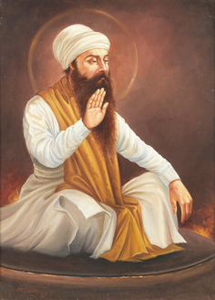
On Ang 1136, Sikh Guru Arjan explicitly writes: "So mukh jalau jit kaheh Thaakur jonee" (translated directly as:
"Let that mouth be burnt, which says that our Lord and Master is subject to birth" ). [1]
The Paradox of Inclusivity: Sikh Scriptural Condemnation of Incarnation
Introduction
The 3-Block Theological Cross-Examination
Entry 1: The Curse Against the Incarnation of God (Rejection of Christianity and Hinduism)
- Block
1 The Raw Source Content:
- Scriptural Address: SikhItToTheMax - Ang 1136 (Composed by Guru Arjan Dev)
- Literal Text/Context: In a composition directly attacking the worship of deities subjected to a human lifespan or physical idols, the text states: "Let that mouth be burnt, which says that our Lord and Master is subject to birth. He is not born, and He does not die; He does not come and go in reincarnation." ("ਸੋ ਮੁਖੁ ਜਲਉ ਜਿਤੁ ਕਹਹਿ ਠਾਕੁਰੁ ਜੋਨੀ ॥੩॥" / "So mukh jalau jit kaheh Thaakur jonee ||3||" ). [1]
- Block 2 The Modern Sikh Apologist Shield: Apologists argue that this harsh phrasing is directed at the concept of reducing an infinite, formless Creator (Nirgun ) into a finite, material body. They claim it is a poetic, medieval idiom meant to fiercely protect monotheism, rather than a literal curse directed at neighboring communities.
- Block 3 The Logical Bottleneck / Exclusionary Reality: This defense completely invalidates the foundational theology of Christianity (which asserts that Jesus Christ is God manifest in the flesh) and traditional Hinduism (which reveres Rama and Krishna as literal Avtars or incarnations of the supreme divine). From a secular, objective standpoint, if your holy text explicitly states that a mouth should be burned for professing a doctrine, your system does not "accept all paths." It views the core theological mechanics of Christians and Hindus as a blasphemous falsehood. [1, 2, 3]

Biblical scriptures, God Born In Flesh:
John 1:14: "The Word became flesh and made his dwelling among us. We have seen his glory, the glory of the one and only Son, who came from the Father, full of grace and truth."
1 John 4:2-3: "By this you will know the Spirit of God: Every spirit that confesses that Jesus Christ has come in the flesh is from God, and every spirit that does not confess Jesus is not from God. This is the spirit of the antichrist, which you have heard is coming and which is already in the world at this time.
1 Timothy 3:16: "Beyond all question, the mystery from which true godliness springs is great: He appeared in the flesh, was vindicated by the Spirit, was seen by angels, was preached among the nations, was believed on in the world, was taken up in glory."
Hebrews 2:14: "Since the children have flesh and blood, he too shared in their humanity so that by his death he might break the power of him who holds the power of death—that is, the devil—"
2 John 1:7: "I say this because many deceivers, who do not acknowledge Jesus Christ as coming in the flesh, have gone out into the world. Any such person is the deceiver and the antichrist"
Entry 2: The Co-Option and Sanitisation of Bhagat Namdev
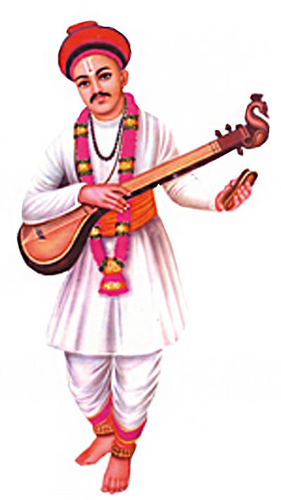
- Block 1 The Raw Source Content: The Guru Granth Sahib contains 61 hymns authored by the 14th-century Maharashtrian saint Bhagat Namdev . Historical and cultural records show that Namdev was a lifelong, devout Hindu Bhakta whose entire spiritual framework was centered around his deep devotion to Vitthal (a form of the Hindu deity Krishna ). [4]
- Block 2 The Modern Sikh Apologist Shield: Public relations campaigns use the presence of Namdev’s verses as an absolute shield to prove universal interfaith equality. They argue that because a Hindu saint's words are included in the scripture, the faith transcends religious boundaries.
- Block 3 (The Logical Bottleneck / Exclusionary Reality): This creates a profound internal contradiction. If Bhagat Namdev achieved supreme spiritual liberation through his devotion to Vitthal (Krishna), yet the text simultaneously states on Ang 1136 that anyone claiming God takes birth should have their mouth burnt, the system is logically broken. To resolve this, modern apologists engage in historical and linguistic rewriting: they claim that Namdev "evolved" away from his traditional Hindu roots and stopped believing in a physical incarnation of Krishna before his verses were recorded. This structural sanitization effectively strips a historical Hindu saint of his actual identity to make him conform to the exclusive parameters of the host dogma. [1]
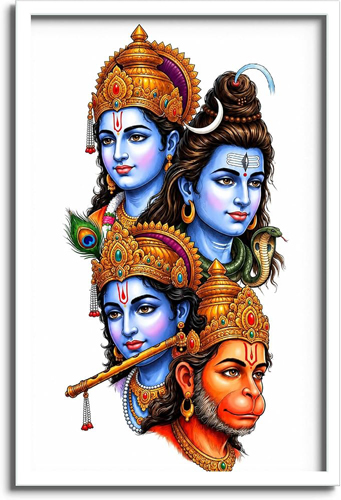
Hindu Vedic Scriptures, God Born In flesh:
Śrīmad-Bhāgavatam » Canto 1: Creation -
22: "In the eighteenth incarnation, the Lord appeared as King Rāma. In order to perform some pleasing work for the
demigods, He exhibited superhuman powers by controlling the Indian Ocean and then killing the atheist King Rāvaṇa, who was on the other side of the sea."
Śrīmad-Bhāgavatam » Canto 1: Creation -
23: "In the nineteenth and twentieth incarnations, the Lord advented Himself as Lord Balarāma and Lord Kṛṣṇa in the family of Vṛṣṇi
[the Yadu dynasty], and by so doing He removed the burden of the world."
Śrīmad-Bhāgavatam » Canto 1: Creation -
24: "Then, in the beginning of Kali-yuga, the Lord will appear as Lord Buddha, the son of Añjanā, in the province of Gayā, just for the purpose of deluding those who are envious of the faithful theist."
Summary Matrix: The Illusion of Pluralism vs. Doctrinal Exclusion
| The Public Relations Narrative | The Empirical Scriptural Reality | The Sociological Consequence |
|---|---|---|
| "Validating All Faiths": The digital marketing version claims that the text embraces all religious paths as equally valid routes to the same ultimate Creator. | Absolute Dogmatic Exclusion: The text actively curses the foundational beliefs of Christians and Hindus, explicitly declaring that the concept of an incarnated God is a fundamental falsehood (Ang 1136 ). | The Co-Option Strategy: The inclusion of non-Sikh saints is not an endorsement of their original religions. It is a conditional absorption. The host institution uses their names for public relations capital while completely erasing or re-interpreting their actual, unedited Hindu or Sufi practices to match the host system's boundaries. |