 Ban The Kirpan
 Sikhs & Mosque Smashing
The Architecture of Desecration: Dismantling the Myth of Universal Religious Protection
Introduction
The 4-Block Historical Cross-Examination
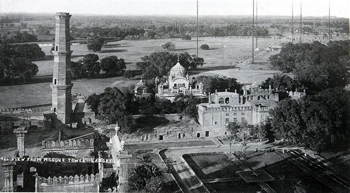
MOSQUE 1: The Military Desecration of the Badshahi Mosque (1799–1849)
- The Raw Historical Data: Upon seizing control of Lahore on 7 July 1799, the Sikh army under Maharaja Ranjit Singh confiscated the Badshahi Mosque—the largest Mughal house of worship in the region. The state stripped the mosque of its spiritual utility and converted its vast courtyard into an active horse stable. Its 80 Hujras (scholarly study rooms) were cleared out to serve as military quarters and ammunition depots. Furthermore, the red sandstone cupolas and marble finials atop the minarets were stripped down and plundered to construct secular pavilions like the Hazuri Bagh Baradari. Following Ranjit Singh's death, his successor Sher Singh mounted heavy artillery on the mosque's minarets to bombard rival factions inside the Lahore Fort.
- (he Modern Sikh Apologist Shield: Apologists and digital marketing accounts argue that Ranjit Singh was a uniquely secular ruler who built temples for all faiths. They claim that using the courtyard as a stable was a logistical military necessity approved by local clergy, rather than a deliberate act of religious humiliation or hatred.
- The Logical Bottleneck / Exclusionary Reality: This defense fails under basic standards of religious respect. Converting a community's primary cathedral mosque into a horse stable, storing gunpowder in its vaults, and stripping its marble architecture for secular royal palaces constitutes structural desecration. It proves that the "secular savior" narrative is heavily airbrushed; under the Sikh Empire, minority houses of worship were treated as expendable military assets rather than sacred, protected spaces.
Secular View:
[1] https://m.thewire.in/article/history/ranjit-singh-statue-lahore-sikh-muslim-history/amp
[2]https://www.awazthevoice.in/world-news/pakistani-breaks-statue-of-ranjit-singh-in-lahore-5004.html
Pakistani view: [3] https://www.dawn.com/news/1280353/lahores-iconic-mosque-stood-witness-to-two-historic-moments-where-tolerance-gave-way-to-brutality
[4] https://www.thenews.com.pk/tns/detail/568055-standing-alone-inside-fort
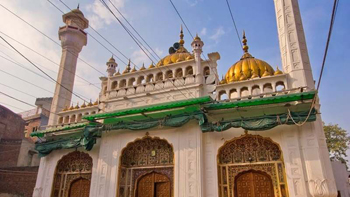
MOSQUE 2: The Plunder and Ban on the Sonehri Masjid (Golden Mosque)
- The Raw Historical Data: Built in 1753 by Nawab Bhikari Khan, the Sonehri Masjid (Golden Mosque) in Lahore was subjected to unconscionable desecration during the period of Sikh dominance. The Lahore Durbar seized the wealthy mosque, halted Islamic prayers, and plundered its structural assets. When senior court officials interceded to restore it to the Muslim community, the Sikh administration agreed only under a strict, conditional proviso: a total ban on the Azan (the Islamic call to prayer) and the absolute confiscation of all revenues from shops attached to the mosque.
- The Modern Sikh Apologist Shield: Modern PR campaigns erase these restrictions, highlighting instead that the mosque was eventually "returned" to the Muslim community to demonstrate the regime's ultimate tolerance and benevolence.
- The Logical Bottleneck / Exclusionary Reality: Forcing a house of worship to operate under a legal ban on its primary vocal prayer (Azan ) while stripping its economic infrastructure is a form of systematic religious suppression. It proves that minority religious freedom under the empire was not an inherent human right, but an intensely conditional, heavily restricted privilege managed by the ruling elite.
[1] https://images.dawn.com/news/1186189/how-muslims-and-lahore-got-sunehri-mosque-back-from-the-sikhs
MOSQUE 3: The Systematic Demolition of Mosques During Partition (1947)
- The Raw Historical Data: During the communal violence of the 1947 Partition, the Muslim population in Indian-controlled Punjab was violently reduced from 33% to a mere 0.5% through forced migrations and massacres. Across rural and urban Punjab, hundreds of historic village mosques were targeted by armed Sikh jathas, looted, and completely demolished or flattened. In villages like Sarwarpur (Samrala), Bhalloor (Moga), and Gurdaspur, the abandoned, damaged mosques were either left in total ruin or forcibly converted into Gurdwaras and secular properties.
- The Modern Sikh Apologist Shield: Modern digital campaigns hyper-focus on post-2010 news stories showing local Sikh communities helping to rebuild a tiny handful of these ruined mosques. They use these highly publicized charity events as proof of inherent inter-communal harmony and scriptural tolerance.
- The Logical Bottleneck / Exclusionary Reality: While modern rebuilding efforts are positive, using 21st-century charity to erase 20th-century structural destruction is an act of historical distortion. The empirical data shows that hundreds of mosques lay flattened or occupied for over six decades. The necessity for a massive, modern project to return and restore these buildings proves the scale of the initial, aggressive structural erasure committed by Sikhs.
MOSQUE 4: The Structural Erasure of the Shaheed Ganj Mosque (1762–1935)
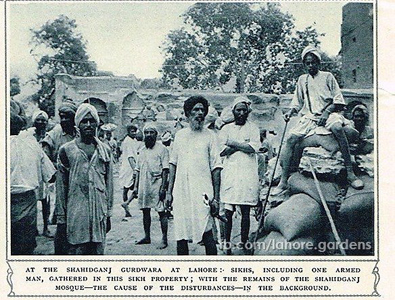
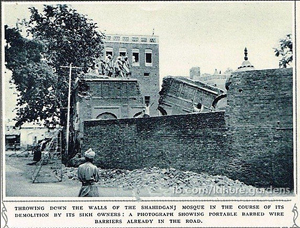
- The Raw Historical Data: Constructed in 1653 by Kotwal Abdullah Khan during the reign of Mughal Emperor Shah Jahan, the Shaheed Ganj Mosque (originally the Abdullah Khan Mosque) was a fully functioning Islamic house of worship until the onset of Sikh rule in 1762. A Sikh military unit seized the complex, halted Muslim prayers, and established the Gurdwara Bhai Taru Singh within the exact same grounds. For nearly a century under British rule, the Muslim community engaged in a protracted legal battle to reclaim the site. However, on the night of 7–8 July 1935 , while negotiations and legal appeals were actively pending, a mobilized Sikh mob systematically demolished and flattened the entire historical mosque structure to eradicate any physical trace of Islamic architecture. The minutes of the British India Privy Council explicitly recorded that the demolition was executed "by or with the connivance of its Sikh custodians."
- The Modern Sikh Apologist Shield: Apologists rely on the legal victories granted to them by British courts under the "law of limitations" (which rejected Muslim claims due to the passage of time). They frame the current standing of the white, two-storey Gurdwara on the site as a symbol of historical justice and religious steadfastness, ignoring the illegal, physical destruction of the underlying mosque.
- The Logical Bottleneck / Exclusionary Reality: This incident exposes a massive theological double standard. The global diaspora routinely cites the 1992 demolition of the Babri Masjid by a Hindu mob in Ayodhya as an act of majoritarian religious barbarism. Yet, the 1935 demolition of the Shaheed Ganj Mosque was executed using the exact same playbook: a late-night, mobilized mob weaponising physical destruction to bypass the rule of law and permanently replace a mosque with a temple. It proves that the narrative of universal multi-faith Sikh protection is structurally void; the institution has historically utilized majoritarian violence to violently erase minority holy sites.
The minutes of the British India Privy Council and the historical record of its sudden demolition on the night of 7–8 July 1935 provide an airtight, irrefutable archival anchor. This historical event shows that even under British administrative oversight, the institutional default was structural erasure.
Summary Matrix: Digital Marketing vs. The Historical Ledger
| The Public Relations Narrative | The Empirical Historical Record | The Sociological Consequence |
|---|---|---|
| "Universal Protectors of Faith": The community is marketed as a uniquely peaceful entity whose history consists entirely of guarding neighboring religious groups from persecution. | Systemic Military Desecration: When holding absolute state power, the institution treated minority shrines as military spoils—turning cathedrals into stables, banning prayers, and systematically demolishing hundreds of village mosques during territorial conflicts. | The Rebuilding PR Shield: Modern advocacy groups use highly publicized, isolated acts of 21st-century mosque restorations to build media capital in the West. This strategy safely hides the massive historical reality that the initial destruction and decade-long conversion of those very same sites was executed by their own community. |