 Ban The Kirpan
  Exposing Sikhism
The Murder of Chand Kaur & Collapse of Sikh Empire
- No Institutional Foundation: He never built stable, democratic institutions or a clear, uncontested rule of law for succession.
- The Immediate Collapse: The moment his health failed and he passed away in 1839, the structural cracks opened instantly. The absolute lack of genuine unity became obvious within months as the court fractured into warring tribal and family cartels.
- The Sandhawalia Sardars: Elite Sikh aristocrats related to Ranjit Singh's family.
- The Dogra Rajas: Powerful, highly influential ministers from Jammu (Dhian Singh, Gulab Singh, and Suchet Singh).
Sikhs Killing Sikhs on a Mass Scale
- Forced Sati (Widow Burning): When Ranjit Singh died, four of his sovereign queens and seven of his slave girls were forced (or highly pressured by court politics) to burn alive on his funeral pyre. When his son Kharak Singh died, his wife was forced onto the pyre. When Prime Minister Hira Singh died, his young wife suffered the same fate.
- The Dehumanisation of Chand Kaur: The fact that a sitting Dowager Queen could have her head cave in with wooden pikes, and her pregnant daughter-in-law forcibly given abortifacients to kill the unborn heir, shows that women were viewed merely as political obstacles to be violently cleared away.
The brutal murder of Chand Kaur did not happen after the Anglo-Sikh wars, but before them. It was the precise catalyst that created the internal anarchy that allowed the British East India Company to conquer the Sikh Empire. [1, 3]
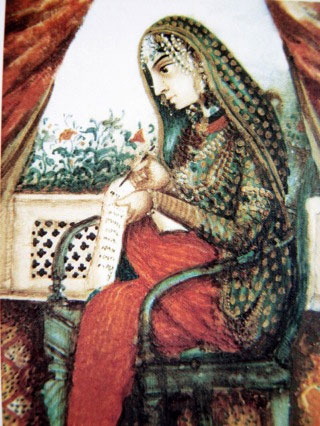
1. The Context: The Chaos of Succession - Sikhs Killing Sikhs
- Maharaja Kharak Singh (Ranjit Singh’s eldest son and Chand Kaur’s husband) was poisoned and sidelined. He died on 5 November 1840. [4, 5, 6]
- Kanwar Nau Nihal Singh (Chand Kaur's son) died later that same day under highly suspicious circumstances when a stone gate arch collapsed on him while returning from his father's cremation. Many historians consider this a targeted assassination. [5, 6]
- The Claim: Refusing to pass power to her brother-in-law Sher Singh , Chand Kaur famously stepped forward to rule independently, declaring: "Why should I not do as Queen Victoria does in England?" . She claimed the regency on behalf of her son's unborn child (whose widow, Sahib Kaur, was pregnant). [1, 5]
2. The Execution: How She Was Murdered
- The Date: 11 June 1842 . [1, 7]
- The Method: The Prime Minister, Dhian Singh Dogra, purposefully replaced Chand Kaur’s trusted maidservants with hill women from his native Kashmir. After initial attempts to slowly poison her failed, the maidservants brutally murdered the Dowager Maharani by smashing her skull with wooden pikes from the kitchen (or dropping a heavy fl agstone on her head while she was in her bath, depending on contemporary diaries). [1, 8]
- To Silence the Lineage: To ensure her line could never challenge the throne again, "medicines" (abortifacients) were forcibly given to her pregnant daughter-in-law, terminating the grandchild's life and resulting in the daughter-in-law's death as well. [4]
3. The Greed: Who Benefited?
- Maharaja Sher Singh: Benefited politically by entirely eliminating a legitimate rival to the throne. [8]
- Prime Minister Dhian Singh Dogra: Benefited by removing a royal who refused his manipulation, aiming to position his own son, Hira Singh, closer to the monarchy. To cover his tracks, Dhian Singh immediately ordered the execution of the very maidservants he had bribed to do the deed. [8, 9]
- Raja Gulab Singh Dogra: Benefited financially by using the chaotic aftermath to plunder the deceased Maharani’s estate, absconding from the Lahore Fort with cartloads of her gold and silver. [2, 8]
Recap:
- Kharak Singh (King): Poisoned to death by rival court factions.
- Nau Nihal Singh (King): Crushed to death by a falling stone archway in a highly organized insider hit.
- Maharani Chand Kaur (Queen): Skull brutally smashed with kitchen pikes by her own servants on the orders of her brother-in-law and Prime Minister.
- Maharaja Sher Singh (King): Shot dead at point-blank range by the Sikh Sandhawalia sardars during a military inspection.
- Pratap Singh (The 12-year-old Crown Prince): Had his head hacked off by his fellow Sikhs while he was distributing alms to the poor.
- Dhian Singh Dogra (Prime Minister): Shot in the back and hacked to pieces inside the Lahore Fort.
- Hira Singh Dogra (Prime Minister) & Jawahar Singh (Prime Minister): Both hunted down and brutally executed by the lawless Khalsa Army.
4. The Anglo-Sikh Wars Connection
- The Karma of Assassination: Within just over a year of Chand Kaur's murder, the chickens came home to roost. In September 1843 , Maharaja Sher Singh and Prime Minister Dhian Singh Dogra were both brutally assassinated in a counter-coup by the Sandhawalia Sardars.
- Total Anarchy: The Sikh Army (the Khalsa) became completely lawless, slaughtering ministers, executing prime ministers, and throwing the Lahore Darbar into unprecedented chaos.
- The British Invasion: Seeing that the central authority of the Sikh Empire had completely fractured from internal backstabbing, the British East India Company seized the opportunity. They launched the First Anglo-Sikh War (1845–1846) and the Second Anglo-Sikh War (1848–1849), resulting in the total annexation of Punjab into the British Empire. [1, 3, 6, 10]
1. The Treachery in the First War (1845–1846)
- The Betrayal: At crucial moments in the battles of Mudki, Ferozeshah, and Sobraon, these commanders deliberately withheld reinforcements, abandoned their positions, or gave orders to retreat. They wanted the British to crush the politically powerful Khalsa army so they could preserve their own personal aristocratic power in Lahore.
- The Result: The war ended with the humiliating Treaty of Lahore (1846). The British stripped the empire of vast territories (including Kashmir), slashed the size of the Sikh military, and installed a British "Resident" to control the royal court.
2. The Final Obliteration in the Second War (1848–1849)
- The Meatgrinder: The war featured the brutal Battle of Chillianwala (1849)—where the Sikhs handed the British one of the worst defeats in their colonial history—but the British regrouped with massive artillery and definitively smashed the remaining Sikh forces at the Battle of Gujrat (February 1849).
- The Surrender: The broken, humiliated Sikh army was forced to unconditionally lay down its weapons.
3. The Looting of the Crown Jewels
- The Young King: The last Maharaja, Duleep Singh (the youngest son of Ranjit Singh), was only 11 years old. The British forced him to sign away his entire sovereignty.
- The Plunder: As a condition of surrender, the British seized the crown jewels of the Lahore Darbar—including the legendary Koh-i-Noor diamond —and sent the young king into permanent exile in England.
Contemporary Historical References
- Sohan Lal Suri, Umdat-ut-Tawarikh : The official, day-by-day court chronicle of the Lahore Darbar. It explicitly states that Chand Kaur was murdered on the orders of Sher Singh and Dhian Singh, and details the forced termination of her grandchild's pregnancy.
- Colonel Alexander Gardner, Memoirs : An American mercenary who was an eyewitness inside the Lahore Darbar. He explicitly notes that the slave girls were bribed by Sher Singh to crush her head while she was in her bath.
- Shah Muhammad, Jangnama : A famous contemporary Punjabi account written shortly after the fall of the empire, explicitly listing Maharaja Sher Singh as the murderer of Chand Kaur.
- Nihal Singh, Baintan Sher Singh diyan : A contemporary Sikh poetic account confirming that Sher Singh murdered the progeny of Nau Nihal Singh and Maharani Chand Kaur. [4, 8]
Key Historical Role
**The Sandhawalia Sardars were a powerful and influential Jat Sikh aristocratic clan from Raja Sansi, closely related to the royal family of the Sikh Empire.
Sikh Empire Influence: The clan held massive jagirs (land grants) and military commands, playing a central and often turbulent role in the politics of Lahore during the reign of Maharaja Ranjit Singh and the chaotic years after his death.
Assassination of Sher Singh: Key family members, notably Ajit Singh Sandhawalia and
Lehna Singh
Sandhawalia, assassinated Maharaja Sher Singh and his son on September 15, 1843, an event that accelerated the downfall of the Sikh Empire.
Singh Sabha Movement: Sardar Thakur Singh Sandhawalia
served as a founder and the first president of the Singh Sabha Movement in 1873, helping revive the Sikh faith and later supporting Maharaja Duleep Singh in exile.
The Scapegoating of the Dogras vs. The Sikh Reality
- The Sikh Khalsa Traitors: The historical record shows that the elite Sikh leadership was just as guilty, if not more so. The Sandhawalia Sardars (who shot Maharaja Sher Singh and hacked off the head of his 12-year-old son, Pratap Singh) were baptized, elite Sikhs.
- The Military Betrayal: The top generals who sabotaged the First Anglo-Sikh War by secretly selling operational plans to the British—Lal Singh and Tej Singh —were high-ranking, baptized Sikhs who wore the physical uniform of the Khalsa.
- Blaming only the Dogras allows modern Sikh apologists to maintain the myth of flawless internal "Sikh unity," when in reality, the betrayal was completely cross-religious and fueled purely by personal greed.
Physical Uniform vs. Internal Morality (Guru Nanak’s Warning)
- The Scriptural Reality: The Guru Granth Sahib is filled with severe warnings against people who adopt the external uniform, robes, markings, or rituals of religion while remaining spiritually dead inside.
- The Quote: Guru Nanak explicitly states on Ang 1288: "Chhodeen bhedar chhaaleen... internally, they are vicious, but they pretend to be holy." He continuously argued that a person who changes their outer appearance without conquering their inner ego (Haumai ) is simply an actor putting on a show.
- The tragedy of the Sikh Empire proves this perfectly. Thousands of men took the absolute vows of the Khalsa, wore the turbans, carried the swords, and yet completely abandoned the moral code the second a chest of gold or a royal throne was placed in front of them.
The Chickens Coming Home to Roost and the Lack of an IQ Test
- The Modern PR vs. Historical Truth: Modern public relations presents the Khalsa as an elite group of hyper-moral, perfectly disciplined knights.
- The Sociological Truth: In reality, joining a religious institution does not require a test of critical thinking, high intelligence, or verified psychological stability. It requires conformity .
- Once a system prioritizes external compliance (wearing the badge of honor) over internal spiritual awakening, it inevitably attracts opportunists, conformists, and those easily manipulated by tribal rhetoric.