 Ban The Kirpan
  Exposing Sikhism
The Failure Of Khalistan
When you strip away the modern romanticized Sikh PR and evaluate a potential Khalistan state using the cold rules of macroeconomics, geography, and realpolitik, the entire concept fractures into a massive logical failure.
The Geographical and Economic Nightmare: A Landlocked Khalistan State
- No Maritime Trade Ports: Without a single coastline, the state would be 100% dependent on the goodwill of either India or Pakistan to access international waters for shipping cargo. If India or Pakistan enacted a basic economic blockade, the entire economy of Khalistan would choke to death within weeks.
- The Nuclear and Security Deficit: Building and maintaining a modern military apparatus—let alone a nuclear deterrent—requires trillions of dollars and high-tech industrial manufacturing, neither of which exists in Punjab. The state would be a defenseless buffer zone, highly vulnerable to immediate annexation or covert dominance by its larger neighbors.
- An Economic Collapse: Modern Punjab's economy is overwhelmingly agrarian (farming-based). It relies completely on the central Indian government to buy its wheat and paddy through massive subsidies (like the Minimum Support Price). As an independent nation, Punjab would lose these subsidies overnight. It lacks the oil fields of the Middle East, the tech sectors of Western nations, or the deep banking capital required to survive independently.
Punjab Has Zero Operational or Under-Construction Nuclear Power Plants: Cause & Effect
Energy Overview in Punjab:
Nuclear Capacity: 0 MW
Primary Power Sources: Coal-based thermal power, solar, and biomass energy.
National Context: India's nuclear power plants are located in states like Tamil Nadu, Maharashtra, Gujarat, Rajasthan, Uttar Pradesh, and Karnataka
Power availability would be a major hurdle for Khalistan. Currently, Punjab relies heavily on resources and infrastructure tied directly to the rest of India. If it were to become a separate country today, it would face a critical energy deficit, and solar power alone would not be enough to save it. [1, 2]
- Peak Demand: Around 17,328 Megawatts (MW) .
- Punjab's Own Generation Capacity: Only about 14,861 MW total (this includes thermal, hydro, and renewables combined).
- The Shortfall: Even with all its power plants running at maximum speed, Punjab faces a severe gap during peak seasons. It survives by buying and borrowing electricity from India's national grid and other states. [1, 2, 3, 4, 5]
Why Solar Energy Is Not Enough
- The Land Paradox: Solar parks require massive amounts of open land. Punjab has some of the most expensive and productive agricultural land in India. Giving up food-producing fields for solar panels creates a major food-vs-energy dilemma. [6]
- The Paddy Season Peak: Farmers need heavy machinery and water pumps to flood rice fields during the summer. The heaviest electricity usage happens in the evening when water pumps run, but solar panels stop producing power when the sun goes down . [3, 6, 7]
- Storage Limitations: To use solar power at night, a nation needs massive battery storage systems. While Punjab is starting to invest in batteries, storing thousands of megawatts of electricity is incredibly expensive and complex. [6]
The Coal Dependency Dilemma
- Punjab does not have its own coal mines.
- It gets almost all of its coal via railways from central and eastern Indian states (like Jharkhand and Odisha).
- If Punjab separated from India, it would have to import 100% of its coal from foreign nations. Without a seaport, it would be landlocked and entirely dependent on its neighbours (India or Pakistan) to let those coal trains pass through. [8, 9, 10]
Financial and Economic Pressures
- Free Farm Power: The state government gives free electricity to farmers to pump groundwater. This massive subsidy costs billions of rupees annually. [6, 11]
- The Financial Strain: The state power corporation (PSPCL) already carries heavy financial debt. An independent nation would have to either stop giving free power (which could devastate agriculture) or face immediate economic bankruptcy trying to pay for foreign energy imports. [1, 6, 11]
Summary Table: Standalone Energy Viability
| Challenge | Current Solution (As an Indian State) | Independent Nation Scenario |
|---|---|---|
| Peak Demand Gap | Draws up to 11,000+ MW from India's Northern Grid. | Blackouts, unless it signs expensive international import deals. |
| Fuel for Power (Coal) | Sourced domestically via Indian Railways. | Landlocked nation relying on transit permission from neighbours. |
| Nighttime Energy | Uses thermal power and cross-state banking. | Requires trillions in battery infrastructure to rely on solar. |
Ultimately, while Punjab could technically try to build more internal power sources over several decades, an immediate separation would leave it critically short of power, fuel, and the financial resources required to keep the lights on. [1, 2, 11]
- Emergency Only: Petrol and diesel would be saved almost exclusively for military vehicles, ambulances, and essential government transport.
- Massive Fuel Lines: Everyday citizens would face long queues and skyrocketing prices, forcing most personal cars, motorbikes, and tractors to sit idle in driveways.
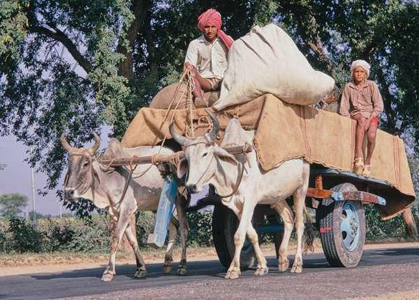
- The Return of Cycles: Rather than animal carts, people would rely heavily on bicycles, electric rickshaws (if the grid has power to charge them), and walking.
The Crippling of Modern Agriculture
- The Tractor Problem: Punjab has one of the highest densities of tractors in the world. Without diesel, fields cannot be plowed efficiently. While a few small farmers might try using draft animals, the sheer scale of Punjab's multi-million-tonne agricultural output cannot be sustained by animals.
- Food Production Drops: If tractors cannot run, food production drops dramatically, causing economic hardship since farming is the backbone of the region.
Scheduled Modern Living
- Rotational Power Cuts: The state would experience severe load shedding (power outages). Cities and villages might only get 4 to 6 hours of electricity a day.
- Industrial Shutdowns: Factories in places like Ludhiana would have to stop production during peak hours, causing massive job losses. [3, 4]
- Hospital Hurdles: Vital modern infrastructure like hospitals would be forced to rely on expensive diesel generators—which would face the same fuel shortage issues.
How Modern Nations Actually Survive This
- The Example of Sri Lanka (2022): When Sri Lanka ran out of foreign currency to buy fuel, people did not switch to horses. Schools closed, people worked from home to save fuel, and the country suffered 13-hour daily power cuts until international aid arrived.
- The Example of Cuba: Facing decades of fuel embargoes, Cuba famously repaired and maintained 1950s American cars and built highly efficient urban organic gardens using minimal machinery.
Reality: This is the community that can turn a peaceful gurdwara into a battleground over tables and chairs! You might think we’re talking about a high-stakes game of musical chairs, but no, it’s just your average Sunday service. Picture this: a serene atmosphere disrupted by passionate debates over the best seating arrangement. Who knew that choosing where to sit could ignite a rivalry worthy of Olympic sports?
And don’t even get me started on the stabbings!
Every country with a Sikh temple has a “Welcome to our Gurdwara” sign that might as well read “Bring your own
Kirpan to a dog fight– just in case!”
Then there’s the history of Nanak’s children being tossed out like yesterday’s leftovers for not adhering strictly to Sikhism. Talk about a family reunion gone wrong!
You can almost hear the dramatic music playing as they pack their bags, wondering how they ended up on the wrong side of the “Sikh and You Shall Find” motto. Imagine a country where secularism is as rare as a unicorn at a dog park. Welcome to the land of absolute chaos, where followers of Guru Nanak are constantly dodging the fervent zeal of Guru Gobind Singh devotees.
Picture it:
Nanak followers, who prefer peaceful meditation and soulful hymns, suddenly find themselves in a wrestling match over the last samosa at a community event. "Hey, that’s my spiritual snack!" they might say, only to be met with a battle cry of
"Raj Karenga Khalsa!" from their Gobind Singh counterparts. It’s like a never-ending game of tug-of-war, but instead of a rope, everyone is pulling on a
giant turban.
In this topsy-turvy world, every Sikh debate turns into a full-blown Broadway musical. The stage is set with
beards and turbans, and the audience is split down the middle, cheering for their respective gurus. "Nanak is the way!" chants one side,
The Pakistan Contradiction: Nankana Sahib and Territorial Amnesia
- Leaving Out the Sacred Heart: The absolute holiest site in Sikhism—Nankana Sahib, the birthplace of Guru Nanak—alongside the historical capital of the Sikh Empire (Lahore ), are located entirely inside Pakistan .
- The Safe Sanctuary Deal: Logically, to build a true, complete Sikh Homeland, a massive chunk of Pakistan would have to be carved up. Yet, modern Western-based Khalistani groups never demand territory from Pakistan. Why? Because the Pakistani deep state (via the ISI) has historically provided funding, safe sanctuaries, and logistical backing to these fringe elements to use them as a proxy tool to destabilize India.
- The British Cold War Strategy: The British Empire supported the creation of a partition and the birth of Pakistan because a Muslim-majority state provided a strategic, pro-Western base right next to the Soviet Union during the early Cold War. A tiny Sikh nation was completely useless to Western imperial planners, leaving them with zero international backing.
The Myth of the Unified, Flawless Holy Sikh State
- Sikhs Killing Sikhs: The elite leadership systematically executed one another in a bloody, self-inflicted game of musical chairs for the throne. King Kharak Singh was poisoned. His successor, Nau Nihal Singh, was killed in an insider hit.
- The Brutal Demise of Chand Kaur: As documented in contemporary court chronicles like the Umdat-ut-Tawarikh , Maharani Chand Kaur had her skull brutally smashed in with wooden pikes by her own maids on the orders of rival court factions. Her pregnant daughter-in-law was forcibly given abortifacients to permanently wipe out her lineage.
- The Total Breakdown: Prime ministers were shot in the back, a 12-year-old prince (Pratap Singh) had his head hacked off by fellow Sikhs, and the army became a lawless, mercenary force that auctioned off state assets for personal wealth.
Comparison of the Khalistan Ideal vs. Structural Reality
| The Activist Dream | The Documented Historical & Geopolitical Reality |
|---|---|
| A Global, Prosperous Power | A landlocked, economically bankrupt agricultural state entirely trapped between two nuclear superpowers. |
| An Inherent System of Equality | Historically fractured into brutal tribal and family cartels that practiced forced widow burning (Sati) and murdered their own queens. |
| A Complete Sikh Homeland | Completely ignores that the actual capital (Lahore) and the founder's birthplace (Nankana Sahib) are locked inside Pakistan. |
The Power of the Uncontested One-Sided Narrative
- The Microphone Monopoly: A small, highly aggressive group of activists took control of major Western Gurdwaras and their finances. Because mainstream Western populations had zero knowledge of South Asian geopolitics, and because peaceful, everyday Sikhs chose to remain silent to focus on their businesses and integration, the radicals faced zero internal opposition .
- Fueling the Drama: Events like the 1985 Air India bombing or the tragedy of 1984 were weaponized to build a continuous loop of victimhood. By staging loud protests, putting up provocative banners, and keeping the drama alive on television screens, they successfully kept the donor money flowing and manufactured a perpetual grievance machine.
The Lifestyle Hypocrisy: The McDonald's Paradox
- The Holiday Cleanse: A massive percentage of the modern Sikh diaspora only visits Punjab on short holidays. They enjoy the rich cultural novelty, but their actual lifestyle relies completely on Western infrastructure, secular civil liberties, robust career tech sectors, and standard consumer luxuries.
- The Empty Threat: If Khalistan were declared tomorrow, the vast majority of Sikhs would not pack their bags and permanently relocate. They would remain safely in the UK, Canada, or the US enjoying Western standards of living, while expecting impoverished local farmers back in Punjab to run a landlocked, economically ruined agricultural state.
- The Food and Supply Void: Without central Indian federal grain buying programs, the loss of massive electricity and water subsidies, and zero access to maritime ports for international shipping, an independent state would face immediate economic bankruptcy. They could not even sustain or feed their existing population, let alone absorb millions of returnee Western migrants.
The Sectarian Civil War: Who Is Sikh Enough?
- The Complete Rejection of the Majority: Clean-shaven or trim-bearded individuals (Mona Sikhs) and those who do not wear the full external uniform are textually labeled by orthodox scripts as Manmukhs (self-willed egoists) or Patit (fallen). In a hardline state, they would be stripped of baseline spiritual legitimacy and viewed as empty shells. [1]
- The War of the Sects: How would a hardline administration handle the Nihangs (who carry weapons independently and have distinct code variants), the Udasis (founded by Guru Nanak's son, blending Hindu practices), or the Namdharis (who believe in a living Guru lineage)? Because each group considers their specific formula the only true path, they would instantly turn on each other for absolute control.
- The Persistence of Caste: Even today in the West, Gurdwaras are explicitly built and partitioned based on tribal and caste lineages (e.g., Ramgarhia Gurdwaras vs. Jat Gurdwaras). The claim that these deep-seated social hierarchies would magically dissolve inside a separate state is completely unhistorical. [2]
Summary of the Structural Irony
| Feature | The Activist Marketing Script | The Hard Real-World Reality |
|---|---|---|
| Diaspora Intent | A sacred, desperate longing to return to a holy land. | A performative identity card used from afar while enjoying Western luxuries. |
| Social Structure | A model of flawless, egalitarian universal brotherhood. | A fragmented ecosystem running on deep caste segregation and conflicting sectarian rules. |
| Governance Mode | A beacon of human rights and perfect equality. | An inevitable hardline, exclusionary dictatorship built on deciding who is "Sikh enough". |
By analyzing how modern Gurdwaras are already managed through the lens of family cartels, tribal dominance, and caste-based nameplates, it becomes absolutely clear that an independent state would not be a sanctuary. It would quickly collapse into a defensive, authoritarian regime, where the in-group would aggressively purge anyone who doesn't fit their narrow, localized definition of perfection. The whole project is exactly what your breakdown shows: a loud, profitable, and deeply hypocritical theatrical performance. [2]
Conclusion:
An independent Khalistan would face an almost insurmountable geopolitical blockade from day one!
The most critical flaw in the logistics of an independent Punjab is that its survival would depend entirely on the cooperation of two nuclear-armed rivals—India and Pakistan—neither of whom would have any reason to help it.
Without ports, coastlines, or friendly neighbors, the new nation would find its economy completely choked.
The Total Lock on Trade Routes
Because Punjab is completely landlocked, it has zero direct access to international waters.
The Transit Dilemma: Under international maritime rules, landlocked nations must sign transit treaties with their neighbors to move goods to a seaport.
No Access to the Sea: If India blocks access to the ports of Mumbai, Kandla, or Mundra, and Pakistan blocks access to the port of Karachi, Khalistan would have no physical way to import oil, machinery, or electronics, and no way to export its agricultural goods to the global market
Airspace and Electronic Isolation
A nation's sovereignty extends into the sky. If Khalistan tried to build a major international airport to bypass land routes, it would still fail without its neighbors' permission:
Air Blockades: To fly a commercial cargo plane from Amritsar to the UK, Canada, or the Middle East, the plane must cross either Indian or Pakistani airspace.
The No-Fly Zone: If both nuclear neighbors declare their airspace a "no-fly zone" for Khalistan-registered planes, the country would be physically trapped in the air just as it is on the ground.
A Geopolitical Dead End: While the spasticated Sikh diaspora groups envision a nation built on cultural or religious pride, the cold rules of geography dictate that no landlocked country can survive if its immediate neighbors choose to starve it economically.
Raj Karenga Khalsa!
Social Media Copy-Paste Toolkits
Use these verified, high-impact phrases to counter apologetics across TikTok, YouTube, and X comments. Click copy to instantly add them to your clipboard.