Guru Nanak Vs Guru Gobind Singh
Guru Nanak Vs Guru Gobind Singh
The
Nanak vs. Gobind Singh Paradox
-
- Guru
Nanak
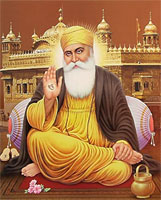
taught a quiet, inward spirituality focused on the mind. He
rejected outward uniforms and religious badges.
- Guru
Gobind Singh
(230 years later) created the Khalsa, making a highly visible military uniform and the carrying
of weapons mandatory.
- Our
(www.banthekirpan.co.uk)
argument proves that Nanak's original, open
framework failed to survive on its own.
- The
broader context:
Mainstream Sikhs and historians do not see this as a
contradiction, but as an evolution
. They argue that the core spiritual message never changed, but the
external rules had to adapt to save the community from total destruction
during a time of intense warfare and persecution by rulers.
The online confusion and debates over choosing between a Nanak follower
or a Gobind follower show a real, deep division in Sikhism.
Critical historians argue that modern institutional Sikhism attempts to
enforce one
strict narrative, while the community's history and text tell a completely different,
conflicting story. This clash creates a significant dilemma when evaluated
logically.
The
Pacifist Mystical Mirror vs. The Sword-Wielding Verdict
- Nanak’s
Weapon:
Nanak argued that the only weapon a human needs to conquer evil
is the Shabad
(the divine word) and absolute mental restraint.
- Gobind’s
Weapon:
Gobind Singh elevated the physical steel sword (Deg
Teg Jaggi
) to a divine status, famously writing in the Zafarnama
that when all diplomatic avenues have failed, it is completely
righteous to draw the physical blade.
- The
Logical Conflict:
This creates an insurmountable divide for a modern follower. You
are forced to choose between a mystical
pacifist
who commands you to conquer your own mind through poetic
introspection, or a wartime
general
who commands you to pick up lethal weapons to enforce justice on
the material battlefield.
The
Literal Broken Formula: Bani is Guru
Sikhism operates on a fundamental doctrine: "Bani
Guru, Guru hai Bani"
(The spoken hymn is the spiritual guide, and the guide is the hymn).
Under strict logic, this creates an immediate structural issue if you
compare the actions and words of the different leaders:
- The
Inward Pacifist:
Guru
Nanak
strictly focused on the mind. He actively
mocked physical uniforms, long matted ascetic hair, holy marks, and
external badges. He taught that any external identity card
creates ego and divides humanity.
[5]
- The
Outward Warrior:
Guru
Gobind Singh
completely reversed this. He made a
highly visible external uniform—including uncut hair (Kesh
), a turban, and a steel blade (Kirpan
)—compulsory
for salvation and entry into the elite group (the Khalsa).
[1, 4, 6]
The
Logical Failure:
If the scriptural hymn explicitly states that
physical uniforms have zero value in God's eyes, then an institution that
legally mandates a physical uniform is contradicting its own core text.
Critics argue that you cannot logically follow both instructions
simultaneously without one breaking the other.
[4]
The
Systematic Erasure of Pluralism
Modern religious authorities (like the SGPC in India) have tried to erase
the historical existence of non-uniformed followers:
[7, 8]
- The
Nanakpanthis:
Historically, millions of people followed Guru
Nanak open, peaceful, inward message without ever keeping long hair,
wearing turbans, or carrying blades. They were known as Nanakpanthis
or Sahajdharis
(slow-adopters).
[1, 8, 9]
- The
Modern Expulsion:
Under the official modern code of conduct (Rehat
Maryada
), anyone who does not keep the 17th-century
military uniform is structurally demoted to a second-class status
or outright told they are not "true" Sikhs.
[1, 7]
This creates a massive identity crisis for modern,
secular Sikh Punjabis. They feel a deep connection to Guru
Nanak philosophy of universal love, but they feel completely rejected by a
modern religious institution that demands they become sword-wielding,
uniformed soldiers just to be accepted.
[1, 4]
The
Unresolved Paradox
The Sikh institution tries to resolve this by claiming that the ten human
guides shared one
single divine light
(Jot), and that the sword was simply a natural evolution to protect the
faith from being wiped out by invaders.
[2]
However, from a secular, logical perspective, this defense fails because it
ignores the absolute shift in the worldview:
- You
are forced to choose between an open,
borderless spiritual framework
(Nanak) or a rigid,
defensive, nationalistic identity block
(Gobind).
- When
modern members argue online about which path is the correct one, they
are inadvertently exposing that the two halves of the religion do not
organically fit together.
[1, 2, 4, 5]
Sikhism fails in the "oneness" of the faith, which is a modern,
polished public relations project. In reality, the system is deeply
fractured because its foundation was built by a pacifist poet, while its
walls were built by a wartime general.
[2, 4, 5, 6]
The
visible identity of modern institutional Sikhism was heavily structured by
17th-century wartime policies and then drastically frozen, codified, and
enforced by the 19th-century British Empire.
[1, 2]
This reality created a permanent structural divide between the original,
un-uniformed Nanakpanthi
followers and the highly visible, militant Khalsa
order. Here is an objective historical breakdown of how this
transformation took place.
[2]
The
Era of Guru Nanak: Zero Uniforms, Simple Devotion
During the 15th and 16th centuries, being a Sikh simply meant being a
disciple or student of the spiritual guide.
[2]
- The
Ritual:
Entrance into the community required Charan
Pahul
(drinking water dipped by the leader's foot). This was a common
medieval Sikh practice designed to crush caste pride and show total
personal humility before a spiritual guide.
[3, 4]
- The
Look:
There was no mandatory dress code, no 5 Ks, no required long
hair, and no turban requirement. A follower could
be entirely clean-shaven (Mona
) or wear local peasant clothing. The entire focus was on Bani
(the internal spiritual message of the mind) and Naam
(divine remembrance).
[2, 5]
Guru
Gobind Singh (1699): The Shift to a Military Order
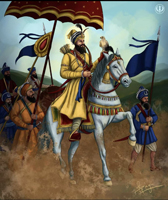
By 1699, intense existential threats and severe persecution by the Mughal
Empire forced a complete systemic re-design.
[6, 7]
- The
Twist:
Guru
Gobind Singh
deliberately abolished the foot-water ritual
(Charan
Pahul
) because the decentralized local deputies (Masands
) had grown corrupt and used it to extort money from poor
followers.
- The
Weaponized Ritual:
He replaced it with Khande
Di Pahul
—water aggressively stirred with a steel dagger (Khanda
).
[5, 8]
- The
Sacrifice Mandate:
The entrance test changed from an act of quiet humility to an
ultimate test of battlefield sacrifice (asking for physical heads). He
mandated the 5 Ks and uncut hair to build a distinct, un-hideable
warrior uniform designed to withstand medieval warfare.
[2, 8, 9]
The
British Empire: Weaponising the Martial Race Theory
While
Guru
Gobind Singh created the
Khalsa
as a defensive mechanism, it was the
British
colonial army
in the 19th century that aggressively codified and locked this
identity into place.
[1]
Following the Indian Rebellion of 1857, the British implemented a deeply
racialized military policy called the Martial
Race Theory
. They asserted that certain ethnic groups were inherently brave,
strong, and biologically built for warfare. They singled out turban-wearing,
long-bearded Khalsa
Sikhs as a prime example of a martial race.
[1, 10, 11, 12]
To exploit this for imperial gain, the British enacted highly rigid rules
in Punjab:
- Compulsory
Compliance:
The British military mandated that any Sikh wishing to join the
prestigious and lucrative British Indian Army had
to be a fully baptized, long-haired, turban-wearing Khalsa Sikh
. Army chaplains were hired to strictly enforce baptism among
recruits.
- Economic
Rewarding:
If you kept the full uniform, you were rewarded with high
military wages, prestigious social status, and massive land grants upon
retirement. If you cut your hair (Mona
), you were barred from these elite opportunities.
- The
Erasure of the Mona Sikh:
This colonial policy directly sidelined
and erased the Sahajdhari
and Mona
Sikhs. It explicitly created the modern global stereotype
that a "real" Sikh must
look like a 17th-century soldier, effectively turning a diverse
spiritual movement into a rigid, one-dimensional military brand.
[1, 2, 13, 14, 15, 16]
The
Resulting Structural Fault Line
Modern Sikh communities faces an ongoing internal
clash:
- The
Scriptural Reality:
The primary holy text (Guru
Granth Sahib
) continues to state that external uniforms, hair, and rituals mean
nothing to a formless God.
- The
Colonial & Institutional Reality:
Modern institutions—built on the remnants of 19th-century
British policing codes—continue to enforce a strict boundary that
treats non-uniformed Sikhs as incomplete or secondary.
When modern users investigate this timeline, they find
that the transition from a borderless poetic movement into a tightly
controlled military institution was heavily accelerated by foreign colonial
masters looking for loyal, easily identifiable frontline soldiers.
[1, 2]
How the Sikh Apologist Attempts to Bypass
Logic:
To keep Sikhism from falling apart, institutional theologians are forced to abandon formal logic and rely on an emotional, faith-based argument called The Jot (Divine Light)
Theory. They argue that all ten Sikh Gurus shared the exact same soul and mind, and that Nanak was simply a teacher delivering
Lesson 1 (cleansing the mind), while Gobind delivered the Final Exam (testing that clean mind in a physical uniform on a battlefield). They claim it is a seamless evolution.
If
an organization relies on an evolution argument, it automatically admits that
the original foundation was incomplete, time-bound, or outdated.
By claiming that the tenth Guru had to add a physical uniform, martial codes,
and literal weapons to complete the faith, institutional theologians
inadvertently create an inescapable trap for themselves.
Here is the step-by-step breakdown of why the
"evolution" defense collapses under logical scrutiny.
The
Logic of Evolution Proves the Past Was Deficient
In philosophy and language, the word evolution
requires progression, upgrading, and changing things that no longer
work for the current environment.
- The
Implication:
If Guru Gobind Singh’s creation of the
Khalsa was a necessary evolution, it means Guru Nanak’s original,
un-uniformed, pacifist formula failed
to survive on its own
.
- The
Outdated Premise:
If a system must be upgraded from a borderless, internal spiritual
practice to a highly visible, defensive military order to withstand
history, the modern reader is forced to conclude
that Guru Nanak’s teachings were a time-bound, medieval product that
became obsolete when political conditions turned violent.
The
Internal Textual Veto: The Scripture Is Already Perfect
The biggest reason the evolution argument fails is that it directly violates
the primary scripture itself. The Guru
Granth Sahib
repeatedly states that the divine word (Bani
) and the path to liberation are complete,
perfect, and timeless
from the very beginning.
- The
Mismatch:
If Guru Nanak’s message of internal mental
purification was already perfect and complete for human salvation, then
adding mandatory physical requirements (the 5 Ks) 230 years later is not
an evolution—it is an unnecessary
alteration
.
- The
Contradiction:
If the physical uniform is not
required for salvation, then the institution is wrong for demanding
it. If the uniform is
required for salvation, then Guru Nanak’s
original uniform-free path was incomplete. You cannot logically
have it both ways.
Graduating
to a Fixed Medieval Uniform
The Sikh apologist argument states that Guru Nanak
delivered Lesson 1 and Guru Gobind Singh delivered the Final Exam.
However, in modern education and science, when a student graduates, they move
forward into broader, more universal concepts.
The
Reality of the Jot Theory
Because this logical error is so glaring, institutional religion has to
completely abandon rational discussion. They use the Jot
(Divine Light) Theory
as an intellectual firewall. It is designed to stop followers from
asking these questions by declaring that the mind cannot comprehend divine
actions.
To a secular historian or an outside analyst, this firewall is a clear sign of
an institutional coping mechanism. The historical reality is simple: the
movement changed because the world around it changed. It was not a seamless,
pre-planned cosmic blueprint; it was a human organization adapting to brutal,
real-world survival pressures. When modern institutions try to freeze those
historical adaptations into a single, flawless, divine rulebook, they leave
their followers with an irreconcilable shambles of logic.
Guru Nanak Vs Guru Gobind Singh
Institutional Sikh Failure
The decision among younger diaspora Sikhs in countries like the UK, Canada,
and the US to abandon the external uniform—most notably the uncut hair (Kesh
) and the turban—is one of the most heavily researched topics in modern
Punjab sociology.
[1]
Sociological studies reveal that choosing to become a Mona
(shaven) Sikh is not just a simple haircut. It triggers a profound
shift in personal identity, family dynamics, and community belonging.
[2, 3]
For young Sikh diaspora men, the decision to shave is frequently a direct
survival mechanism against racism.
[4]
- The
Misidentification Trap:
Academic studies, such as those by sociologist Dr. Sangeeta
Ahluwalia, show that turban-wearing Sikh men are routinely victims of
shifted Islamophobia. They are mistaken for Muslims or stereotyped as
threats because Western societies associate turban headwear with
radicalism.
[5]
- The
Bullying Catalyst:
Research by Dr. Rita Verma ("Nostalgia,
The Public Space and Diaspora"
) highlights that many young Sikh males cut
their hair during school years explicitly to stop relentless racial
bullying and the exhausting mental toll of looking different. Shaving is
used to buy immediate psychological safety and blend into mainstream
Western peer groups.
[4]
When a young person removes the uniform, they do not automatically stop
feeling Sikh. This creates a painful psychological state called internalised
exclusion
:
- The
Second-Class Sikh Status:
Sociological fieldwork on British Sikh youth, such as the Head
First Study
published by the White Rose Consortium, shows that shaven youth face
immense silent judgment when entering traditional temples (Gurdwaras
). Because the institutional orthodoxy heavily privileges the Khalsa
look, shaven individuals are often made to feel like incomplete or
failed Sikhs.
[1, 2, 6]
- The
Disconnect from Institutions:
As highlighted by research on Religious
Transmission among Young Adults
, traditional Gurdwara management often targets messages at the older,
uniformed generation. Feeling judged and alienated by elders, younger
shaven Sikhs increasingly stop attending physical temples altogether.
[7, 8]
Rather than abandoning their heritage completely, younger diaspora Sikhs are
actively redefining what it means to belong to Sikhism:
[3]
- Secularizing
the Faith:
Sociologists observe a major shift toward internalised
religiosity
. Younger generations argue that Guru Nanak’s
core message was entirely about the mind, compassion, and destroying the
ego. They separate the cultural
and military
uniform from their internal moral values.
- Rejecting
the Protestant Model:
Recent academic work, such as studies on How
Colonialism Shaped Modern Sikhism
, highlights that young intellectuals are
blaming the British Empire for creating this rigid divide. They
argue that the British army forced a fluid, poetic spiritual path into a
black-and-white soldier rulebook. By cutting their hair, some youth feel
they are recovering a more authentic, decentralized, and open form of
spirituality.
[4, 9, 10]
To escape the strict judgment of traditional temple committees, young
diaspora Sikhs are building their own spaces:
[8]
- English-Led
Camps and Faith Societies:
Research shows a massive boom in university student Sikh societies
and youth camps held outside traditional Gurdwaras. These spaces
explicitly welcome both shaven and uniformed Sikhs as equals, creating a
supportive environment to discuss history and philosophy in English
without generational pressure.
- Digital
Sangat:
Online platforms have become the new spiritual home for shaven
youth. It allows individuals to anonymously learn about the faith, debate
the contradictions between the Gurus, and find community solidarity
without their physical appearance being policed by physical elders.
[8]
| Dimension
|
Traditional
/ Institutional View
|
Modern
Sikh Diaspora Youth Reality
|
| Identity
Marker
|
Uncut
hair is the absolute "seal of the Guru."
|
Hair
is a personal choice; internal values define a Sikh.
|
| Social
Standing
|
Uniformed
Khalsa
hold elite spiritual authority.
|
Shaven
Monas
are moving to the margins or creating parallel groups.
|
| Spiritual
Space
|
The
physical Gurdwara is the central focal point.
|
University
groups, camps, and online forums replace traditional temples.
|
No matter how much young diaspora Sikhs try to create
a modern, inclusive space online, the physical reality inside temples (Gurdwaras
) remains governed by a strict, highly stratified hierarchy based on
the physical uniform.
When evaluated through a logical and sociological lens, this division breaks
down into specific institutional practices that structurally separate the
uniformed from the shaven.
The
Legal Conflict with the Rehat
Maryada
The absolute rulebook for modern orthodox institutional Sikhism is the Sikh
Rehat Maryada
(the official Code of Conduct), which was formalized in the mid-20th
century.
- The
Definitional Filter:
Section 1, Chapter 1 of the code explicitly states that a Sikh
is someone who faithfully believes in the ten Gurus, the scripture, and “the
baptism (Amrit
) inaugurated by the tenth Guru.”
- The
Structural Hierarchy:
By setting the 1699 military initiation as the defining
standard, the code automatically creates a two-tiered system:
- The
In-Group (Amritdhari / Khalsa):
The fully initiated, uniform-wearing
elite who hold full corporate and spiritual authority.
- The
Out-Group (Sahajdhari / Mona):
Shaven individuals who are textually treated as
incomplete, "slow-adopters," or spiritual dropouts.
Physical
and Ritual Separation inside the Gurdwara
This hierarchy is not just theoretical; it manifests in daily physical
exclusion and strict boundary lines inside traditional temples:
- The
Kitchen and Food Plate Sharing (Langar
Mechanics):
While modern public relations heavily promotes Langar
as a space of absolute equality where everyone sits on the floor
together, severe internal divisions exist regarding who can actually cook
the food. In strict orthodox or Taksali
run Gurdwaras, shaven Sikhs (Monas
) are completely barred from entering the kitchen or touching the
cooking utensils. The logic is that only someone who maintains the pure,
un-altered physical uniform of the Guru is spiritually clean enough to
prepare the communal meal.
- Ritual
Monopolies:
Shaven Sikhs are systematically barred from performing core
ritual duties. A Mona
Sikh cannot serve as one of the Panj
Pyare
(the five beloved ones leading a procession), cannot carry the
holy scripture during formal ceremonies, and is blocked from serving as
a primary priest (Granthi
) or central management committee leader under standard
institutional bylaws.
The
Exhausting Generational and Psychological Sikh Trap
This creates a profound sociological contradiction for the younger
generation. They find themselves trapped between two completely
irreconcilable forces:
- The
Online Reality:
Young people sit in digital spaces discussing Guru Nanak's
beautiful, borderless poetry about internal love and the equality of all
human souls. They convince themselves that "being a good person
inside" is all that matters.
- The
Physical Reality:
The moment they log off and walk into a physical,
brick-and-mortar Gurdwara to connect with their heritage, they are
instantly reminded of their lower status. They see the kitchen doors
closed to them, notice the silent judgment from the uniformed elders,
and realize that the entire institutional machinery is designed to
reward the physical 17th-century military look.
Summary
of the Institutional Sikh Failure
This reality proves that the modern temple system is structurally incapable
of delivering the universal equality it markets to the outside world. By
freezing a 17th-century wartime battlefield uniform into an eternal,
bureaucratic vetting tool, the orthodoxy has built a highly defensive,
divided institution. It forces an ongoing internal crisis where the uniform
is treated as superior to the individual, leaving
shaven youth spiritually homeless in the physical world and forced to
retreat into online networks just to escape the institutional policing of
their bodies.
 Ban The Kirpan
  Exposing Sikhism