 Ban The Kirpan
  Exposing Sikhism
Sikhs: The World War Myth
Exposing Media, Sikh And Exaggerated Lies:
Discover how British colonial records expose the myth of the Sikh 'Warrior Race' and the divide-and-rule recruitment policies behind WWI media narratives.
The forgotten history of the massive Hindu and Muslim majorities who fought in the exact same trenches.
Purpose of This Article: It proves that modern online posts claiming Sikhs were the only or primary force in British armed forces are factually incorrect.
Sacrifice: Showing that a Muslim or Hindu soldier died next to a Sikh soldiers.
The Modern Biased Sikh Diaspora PR Machine:
The Sikh diaspora in the UK, Canada, and the US has spent decades actively funding, organizing, and pushing its history into mainstream consciousness.
The Sikh Approach: Centralized organizations like the UK Punjab Heritage Association
(UKPHA) have launched massive exhibitions, published books, and lobbied the British Parliament to officially recognize Sikh contributions.
The Hindu/Muslim Gap: There is no comparable, centralized public relations effort in the West focusing specifically on the WWI contributions of 18th-century Punjabi Muslims, Pathans, or Dogra Hindus. Because no one is heavily funding digital content or social media toolkits for those demographics, their history stays buried in academic archives.
1. The Numbers Game: The Systematic Erasure of Muslims and Hindus
- The Total Force: Just under 1.5 million Indian soldiers volunteered and served in the British Indian Army during World War I.
- The Muslim Majority: Diverse Muslim communities (including Punjabi Muslims, Pathans, and Balochis) constituted the largest religious bloc in the force. Their presence in the colonial army was nearly double that of the Sikhs.
- The Hindu Core: Hundreds of thousands of Hindus (including Gurkhas, Dogras, Jats, Marathas, and Rajputs) filled the ranks. Broad historical audits of wartime casualties show that approximately 40% were Muslim, 25% were Hindu, and 25% were Sikh .
2. The Built-In Slaughter: The Class Company System
- Mixed Battalions: The British never deployed purely "Sikh-only" divisions to France in September 1914. Instead, they relied on the Class Company System .
- Simultaneous Casualties: A standard infantry battalion was split into different companies by identity—for example, Company A was Punjabi Sikhs, Company B was Punjabi Muslims, and Company C was Dogra Hindus.
- The Meat-Grinder: When these battalions were ordered to charge German machine-gun fire at brutal early battles like Ypres and Festubert, all companies went over the top together. The artillery shells did not discriminate by faith. The casualty logs prove that Hindus, Muslims, and Sikhs died simultaneously from day one.
3. The Collapse of Victorian Pseudo-Science
- Running Out of Men: Early regulations stated that if a Sikh company lost 100 men, they could only be replaced by other Sikhs to preserve the "purity" of the martial unit. Because the Sikh population was so small, the British quickly exhausted the available pool of young Sikh men who met their strict physical criteria.
- Theory in the Trash: To prevent an army collapse, British recruiters immediately abandoned their own pseudo-scientific racial theories. They aggressively expanded recruitment into areas they had previously insulted as "weak" or "non-martial," lowering height requirements and enlisting hundreds of thousands of Hindus, Christians, and lower-caste groups.
- The Reality: This shift proved that soldiering is a product of training, economic opportunity, and discipline , rather than an inherent genetic trait possessed by an exclusive religious group.
4. The DNA Reality: The Lineage of the Sikh Gurus
- The Hindu Ancestry: Every single one of the ten Sikh Gurus was born into a Hindu Khatri family (belonging to the Bedi, Trehan, Bhalla, and Sodhi clans).
- The Shared Gene Pool: The people who joined the Sikh movement over the centuries were local Punjabi Hindus and Muslims (primarily Jats, Tarkhans, Khatris, and Dalits) who adopted a new spiritual path.
- Socio-Political Mobilization: The transition to a martial lifestyle was a historical reaction to heavy Mughal imperial persecution during the 17th century—crystallized by Guru Gobind Singh’s creation of the Khalsa in 1699. It was a process of political mobilization, physical training, and ideological conditioning, not a mutation of human DNA.
Summary: Marketing vs. Historical Record
| The Sugary Public Narrative | The Verifiable Historical Reality |
|---|---|
| "Sikhs were the primary or unique Indian force in WWI." | Muslims and Hindus contributed significantly higher total numbers. |
| "Sikhs took the brunt of the initial casualties in 1914." | The Class Company System ensured all groups died simultaneously from day one. |
| "Sikhs are genetically predisposed to be elite warriors." | The 'Martial Race' was a racist colonial policy designed to maintain British control. |
| "The warrior identity is a mystical, distinct bloodline." | The entire foundational lineage of the Gurus and early converts was ethnically Hindu. |
Conclusion
Documented Proof: The Erasure of Early British Commands
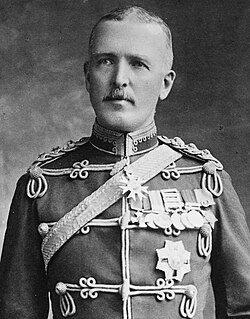
"You will recall the glories of your race. Hindu and Mahomedan [Muslim] will be fighting side by side with British soldiers and our gallant French allies... From mosques and temples their prayers are ascending to the God of all and you will answer their hopes by the proofs of your valour."
— Sir James Willcocks, Lieut-General, Commdg. Indian Army Corps (10th Oct, 1914)
https://www.nationalarchives.gov.uk/education/resources/loyalty-dissent/heroic-fighting-qualities
95
Official "Order of the Day" transcripts detailing the explicit commendation of Hindu and Muslim regiments entering the European theater.
�� View Full Unedited Source File →Why This National Archive Document Is Hidden From Modern PR
- The Complete Omission of the Sikh Label: In his grand rallying cry to the entire Indian Army Corps going into Europe, the British Commander-in-Chief explicitly singles out Hindus and Muslims , along with their respective temples and mosques . He does not mention Sikhs once in this specific foundational order. This proves that the British high command viewed the bedrock of their Indian fighting force as a Hindu-Muslim coalition, completely shattering the myth of exclusive Sikh military prioritization.
- The Geography of Sacrifice: Willcocks identifies the home regions of these soldiers as "the banks of the Ganges and Indus and the Plains of Hindustan" . This acknowledges that the vast majority of the forces were pulled from the broader Hindu and Muslim heartlands of India, rather than being confined to the Sikh districts of central Punjab.
The Modern Promotional Agenda: Why the Asymmetry Exists
- The Self-Marketing Machine: The modern Sikh diaspora has spent decades heavily funding digital content, lobbying politicians, and creating slick multimedia campaigns specifically to highlight their military history. Conversely, there is no centralized, funded PR apparatus in the West tasked with promoting the historical contributions of 18th-century Punjabi Muslims or Dogra Hindus.
- Media Simplification: Mainstream Western broadcasters prefer a single, visually distinct caricature for "Indian martial history." The uniform of the initiated Sikh soldier (the turban and beard) provides an immediate, highly scannable visual brand for television documentaries. The massive contributions of clean-shaven Hindus or clean-shaven Muslims are simply harder to market as uniquely "exotic" to a Western audience, leading to their systematic erasure from modern visual media.