 Ban The Kirpan
 Did Sikhs defeat the Mughal Empire? / Maratha Deccan wars vs Sikh Punjab insurgency history.
The Civilisational Timeline: Re-Anchoring the Collapse of the Mughal Empire
Introduction: The Anatomy of Geopolitical Revisionism
A common narrative circulated across digital portals and social media networks
claims a singular, localized military exceptionalism: that the Sikh Khalsa
army uniquely crushed and ended Mughal rule in India. While
regional rebellions against Mughal overreach were frequent and intense,
treating the fall of a massive imperial empire as the work of one group is
factually incorrect.
This page compiles primary chronological evidence to demonstrate that the
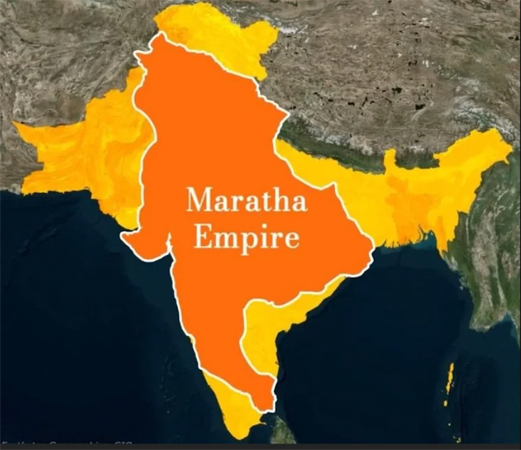
Mughal Empire was structurally broken from the south and center by the Hindu Maratha
Empire
and other multi-faith resistance movements. The Sikh community
consolidated regional power in the Punjab after
the imperial core had already been depleted and fractured.
The 3-Block Historical Cross-Examination
Entry 1: The Deccan Wars (The Structural Demolition)
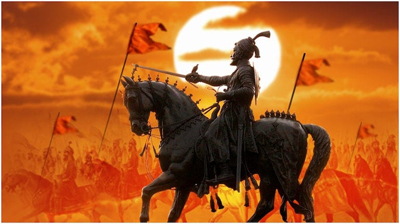
- Block 1 (The Raw Historical Data): The 27-Year Deccan Wars (1681–1707) fought between the Hindu Maratha Empire and Emperor Aurangzeb. This conflict resulted in an estimated 2 to 2.5 million casualties , completely bankrupting the Mughal imperial treasury, destroying its elite cavalry, and permanently breaking the central administrative grip of Delhi.
- Block 2 (The Sikh Tribal PR Narrative): Modern social media campaigns routinely erase the southern and central theaters of war, claiming that the Mughal collapse was engineered primarily in the northwest plains of Punjab.
- Block 3 (The Logical Bottleneck): When Aurangzeb died in the Deccan in 1707, ruined by his failure to conquer the Marathas, the sovereign Sikh Khalsa state (the Misls ) did not yet exist as an institutional governing force. The Marathas had already reduced the Mughal Emperor to a politically weak figure before the rise of Maharaja Ranjit Singh, ruling from 1801 until his death in 1839.
Entry 2: Pre-18th Century Resistance (Rani Durgavati 1524 – 1564 & The Battle of Bhatvadi 1624)
- Block
1 (The Raw Historical Data):
- The Battle of Bhatvadi (1624): Led by Malik Ambar and Shahaji Bhonsle (father of Chhatrapati Shivaji), this battle marked the definitive rise of Maratha military prowess, breaking the Muslim Mughal-led incursions into the Deccan decades before the Sikh Khalsa was founded in 1699.
- Rani Durgavati (1564): The Gondwana queen who aggressively resisted the expansionist armies of Akbar, choosing death over submission.
- Block 2 (The Tribal PR Narrative): Digital apologists market the 1699 Khalsa identity as the world's first and only successful indigenous barrier against total imperial assimilation.
- Block 3 (The Logical Bottleneck): A vast, multi-century matrix of Hindu, tribal, and regional rulers fought successfully to defend their kingdoms long before the 18th century. Erasing their names to promote a single group's "exceptionalism" is an act of historical distortion.
Entry 3: The Ahom Kingdom (The Unbroken Eastern Frontier)
- Block 1 (The Raw Historical Data): The Battle of Saraighat (1671): The Ahom Kingdom of Assam, led by Commander Lachit Borphukan, decisively defeated the massive Mughal army led by Raja Ram Singh, ensuring that northeast India remained permanently outside of Mughal control.
- Block 2 (The Sikh Tribal PR Narrative): The claim that the subcontinent was completely helpless and saved by a single Sikh military intervention.
- Block 3 (The Logical Bottleneck): The Ahoms defeated the Mughals a staggering 17 separate times in battle. This empirical data shatters the one-sided narrative, proving that the defensive frontline against imperial overreach spanned thousands of miles across Assam, Bundelkhand, Mewar, and Maharashtra.
Summary Matrix: Imperial Decline vs. Local Consolidation
| The Social Sikh Media PR Claim | The Verifiable Chronological Facts | The Sociological Mechanism |
|---|---|---|
| "Sikhs Ended the Mughal Empire:" The claim that the Khalsa single-handedly demolished the Islamic states of India to preserve global religious freedom. | Multi-Centric Collapse: The Mughal state was structurally dismantled by the Maratha Empire's multi-decade campaign, coupled with devastating sackings of Delhi by Persian (Nadir Shah, 1739) and Afghan (Ahmad Shah Abdali) invaders. | Narrative Vultures: Diaspora marketing teams exploit the modern public's lack of deep historical literacy. By vacuuming up the collective sacrifices of Marathas, Ahoms, Rajputs, and Gonds, they fashion a unique "savior" identity designed to build political capital in the West. |
The historical reality of Sikh Guru Gobind Singh’s military career is
heavily obscured by modern public relations.
When evaluated through a strict, objective geopolitical lens, his conflicts
with the Mughal administration and local hill chieftains were localized,
defensive engagements that did not structurally alter the imperial map of
India.
Expanding Entry 1: Deconstructing Guru Gobind Singh's Military Record
- The
Critical Historical Data:
- The Battles of Anandpur (1701, 1704): These conflicts were not grand offensive campaigns to topple the Mughal Empire. They were defensive sieges where the early Khalsa was surrounded by a coalition of local Hindu Shivalik Hill Rajas (who viewed the Guru as a regional territorial threat) backed by Mughal provincial troops from Sirhind.
- The Evacuation and Retreat: The battles ended in the strategic evacuation of the Anandpur fort, the scattering of the early Sikh forces, and heavy personal casualties for the Guru’s immediate family.
- The Chamkaur and Muktsar Engagements (1704–1705): These were small-scale, desperate rear-guard actions fought by a handful of surviving disciples while retreating through southwestern Punjab. They were tactically insignificant to the broader Mughal administrative machine operating from Delhi and the Deccan.
- The Modern PR Filter: Digital portals portray Guru Gobind Singh as a supreme, undefeated military general who shattered imperial Islamic hegemony across the subcontinent.
- The Logical Bottleneck: If the 1699 creation of the Khalsa had successfully broken the back of the Mughal Empire, Guru Gobind Singh would not have spent his final years in exile, nor would he have written the Zafarnama (Epistle of Victory)—which was fundamentally an appeal to Emperor Aurangzeb detailing how provincial governors had broken oaths on the Quran. Furthermore, following Aurangzeb’s death in 1707, the Guru actively entered into a diplomatic alliance with the new Mughal Emperor, Bahadur Shah I, even marching alongside him into the Deccan as a political ally, before being assassinated by a Pathan operative in Nanded (1708). This timeline proves Gobind operated within the reality of Mughal suzerainty, not as its conqueror.
The story surrounding the death of Sikh Guru Gobind Singh in October 1708 is
an area where traditional, miraculous faith narratives directly clash with
standard historical archives.
Both versions of the story agree on one central fact: he
was stabbed
by a Pathan assassin
. The divergence happens in the days following the attack and
reveals how religious traditions often seek to reframe a tragic
assassination into a final, conscious spiritual departure.
The physical record and the traditional account break down as follows:
1. The Historical Event: The Assassination Attempt
Historical accounts across contemporary Mughal logs, Maratha records, and
early British East India Company documents state that while the Guru was
camped at Nanded, a Pathan operative (identified in various sources as Jamshed
Khan or Wasil
Beg, reportedly sent by Wazir
Khan, the Governor of Sirhind) entered his tent and stabbed him in the
abdomen. The Guru managed to strike back and kill the assailant, but he was
left with a deep torso wound.
2. The Medical Treatment: The Bow-Stringing Incident
The story of the "bow-stringing" is not an invention by critics;
it is recorded within traditional Sikh historical texts (such as the Suraj
Prakash
) and accepted by mainstream theologians, but it is interpreted through
entirely different lenses:
- The Historical/Medical Reality: The Mughal Emperor, Bahadur Shah I, sent his personal European and Mughal surgeons to treat the Guru. They successfully stitched the deep abdominal wound. Over the next few days, the wound began to heal. However, before the injury had fully scarred over internally, the Guru attempted to draw a heavy, stiff hunting bow. The immense physical strain placed on his core muscles caused the fresh stitches to violently rupture, triggering severe internal bleeding that his body could not recover from. He succumbed to his injuries a few days later.
- The Traditional/Faith Reframe: Traditional apologetics reframe this physical mishap into a deliberate, miraculous act. They argue that the Guru—knowing his worldly mission was complete and wishing to depart his physical body on his own terms rather than dying slowly in a bed—purposefully chose to pull the heavy bow to burst the stitches. In this faith narrative, it is viewed as a final demonstration of warrior spirit and a conscious transition into the afterlife, rather than a medical complication caused by premature physical exertion.
This incident serves as a classic psychological and institutional example of
Sikh narrative
management
.
To maintain the public branding of a
"god-man" who is completely unassailable and in perfect control of
the material universe, the institutional framework cannot easily accept a
human, medical tragedy—that their supreme leader died because an
enemy's knife wound reopened during physical exertion. By shifting the blame
away from the assassin's steel and onto the Guru's own choice to string a
heavy bow, the tradition successfully transforms a successful political
assassination into a voluntary, heroic sacrifice.
The Contrast with True Sovereignty
- The Mughals were structurally broken by the Marathas during the 27-Year Deccan Wars (ended 1707).
- The Sikh Misls only managed to capture Lahore and establish decentralized regional control decades later (starting around the 1760s), capitalizing on the vacuum left after the Persian king Nadir Shah (1739) and Afghan ruler Ahmad Shah Abdali completely sacked Delhi and destroyed what remained of central Mughal authority.
Beware of Sikh Saviour Propaganda: 10 FACTS: EXPOSING GURAMIT SINGH!