 Ban The Kirpan
  Exposing Sikhism
1984 Sikh Victimhood Scam
The Unsanitized Version: During 1970's, Sikhs demanded special rights and protections, within India's constitutional
framework. The Akali Dal sought to secure unique religious, cultural, and political guarantees for the Sikh community, alongside economic rights for the state of
Punjab, so Punjab could govern its own internal affairs without New Delhi's
interference, also transferring Chandigarh, which serves as a shared capital, exclusively to Punjab.
Prime Minister Indira Gandhi and the ruling (liberal secular) Indian National Congress party viewed the
Anandpur Sahib Resolution as an unacceptable threat to the country’s central authority
and rejected the terms.
Indira Gandhi’s administration was highly centralized. New Delhi feared that giving Punjab exclusive water rights, transferring Chandigarh, or limiting central powers to just defense and foreign affairs would trigger a domino effect, leading other states to demand the same autonomy and weakening the central government
Instead of addressing the economic and resource grievances in 1981—such as Punjab's river water disputes—the central government repeatedly stalled negotiations. This political deadlock frustrated moderate Akali leaders and created a vacuum that allowed
terrorist,
Sikh terrorists factions under Jarnail Singh Bhindranwale to gain prominence, shifting the movement away from constitutional protests toward violent
thuggery confrontation
From New Delhi's viewpoint, granting a single, border-state special powers, exclusive resource rights, and its own territory looked like the structural blueprint for a "country within a country" that would eventually break away.
The Akali Dal's (Moderate?) View: Argued they were trying to save India's unity, not destroy it.
Redrawing Borders: Merging Punjabi-speaking areas and claiming Chandigarh was not seen by them as expansionism, but as finishing the linguistic reorganization of states that India had already carried out across the rest of the country in 1956.
The Canadian/US Model: They envisioned India operating more like Canada or the United States, where provinces or states have massive internal powers, their own laws, and control over their resources, but remain fiercely loyal to the federal nation.
The Terrorist Sikh View: A Stepping Stone to Secession. At the exact same time,
Sikh terrorist factions and separatists did view these demands as a soft, initial stepping stone. They intended to use state autonomy to build up a distinct Sikh political consciousness, which they could later leverage to declare an independent country
(Khalistan).
Demands were not met and Sikhs retaliated with violence
Because New Delhi looked at the Akalis and saw hidden separatism, they refused to negotiate. Because the Akalis looked at New Delhi and saw an oppressive,
over-centralised government refusing to grant basic state rights, they escalated their protests. This mutual distrust meant that a debate over constitutional federalism was treated as an act of treason, ultimately leading to the violent breakdown of the 1980s.
As negotiations between New Delhi and moderate Sikhs stalled, Sikh terrorist groups bypassed constitutional politics and began a campaign of terror. They specifically targeted prominent critics, journalists, and Hindu civilians to enforce their ideology and polarize the
population. The critical timeline of how this violence began includes: The 1980 Assassination of Baba Gurbachan
Singh. The first major trigger occurred on 25 April 1980, when Baba Gurbachan Singh, the leader of the Nirankari sect
(traditional Sikhs viewed Gurbachan as heretical), was shot dead. Sikh terrorist
leader
Jarnail Singh Bhindranwale
and his followers were heavily implicated in orchestrating the assassination.
Sikh terrorists systematically targeted the media to silence opposition. On 9 September 1981, a prominent Hindu journalist named Lala Jagat Narain
was assassinated. The Target: Narain was the founder of the powerful Hind Samachar newspaper
group. He was a fierce critic of Bhindranwale and the Khalistan movement.
Over the following decade, Sikh terrorists assassinated 10 more journalists and editors from the same newspaper
group, and gunned down newspaper deliverymen to stop its circulation.
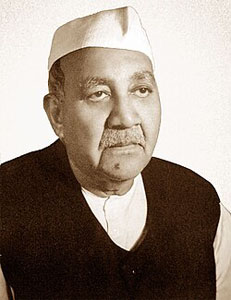
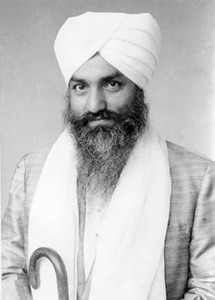
Hindu Lala Jagat Narain and Sikh Baba Gurbachan Singh assassinated by Khalistani Sikh terrorists.
The 1983 Hijacking and Selective Killings of Hindus: By 1983 (Dhilwan bus massacre), the violence expanded from specific political targets to random Hindu civilians to spark communal tension. On 5 October 1983, armed Sikh terrorist hijacked a passenger bus traveling through Punjab. They separated the Hindu passengers from the Sikh passengers and shot six Hindu civilians dead. This specific massacre shocked the nation, proving that the conflict was no longer just a political debate over resources, but a communal religious bloodbath.
The Result: Total Political Collapse. Following the October 1983 bus massacre, Prime Minister Indira Gandhi dismissed the elected government of Punjab and placed the state under Presidential Rule (direct control from New
Delhi). Bhindranwale and heavily armed Sikh terrorist then moved their headquarters into the fortified Golden Temple complex in Amritsar. This set the stage for the catastrophic
vile events of 1984, including
Operation Blue
Star.
https://en.wikipedia.org/wiki/1983_Dhilwan_bus_massacre
Recap: Timeline of Escalation
- 1973: Akali Dal demands regional autonomy and water rights.
- Late 1970s: Rival political parties exploit religious factions for votes.
- 1978: Armed clashes mark the rise of Sikh terroristisation.
- Early 1980s: Sikh Terrorists groups launch targeted killings of Hindu and Punjabi civilians.
- June 1984: Indian Army storms the Golden Temple to capture Sikh Terrorist leader Jarnail Singh Bhindranwale
- October 1984: Prime Minister Indira Gandhi is assassinated by her Sikh bodygaurds.
- November 1984: Hindu Mobs massacre thousands of innocent Sikh civilians in retaliation.
In the early
1980s, Sikh terrorist separatist groups fighting for an independent state of Khalistan initiated a campaign of violence in Punjab, India. This campaign included targeted assassinations, bombings, and
attacks on government officials, police, and Hindu and Punjabi
civilians to polarize communities and spread fear.
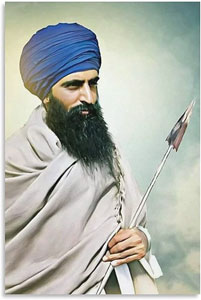
He died during the heavy fighting of Operation Blue Star when Indian army troops stormed the Akal Takht building inside the Golden Temple complex and kicked his bastard terrorist ass.
Military forces located his body in the fortified basement of the structure after the firefight ended.
Source: https://www.hrw.org/reports/INDIA918.PDF
CIA: https://www.cia.gov/readingroom/docs/CIA-RDP06T00412R000606740001-7.pdf
Individual Responsibility vs. Collective Guilt
- Extremist actions: Represented terrorist factions, not an entire religion.
- Diverse victims: Included thousands of Hindus, police, and moderate Sikhs.
- Systemic failures: Allowed political mobs to operate with impunity. [12, 13, 14, 15, 16]
- The thousands of Sikhs killed during the November 1984 violence were ordinary citizens—including women, children, and the elderly—living in cities like Delhi and Kanpur, hundreds of miles away from the conflict zone. [3, 6, 7, 8] The victims had no connection to the insurgency, the assassination of Indira Gandhi, or terrorist ideologies. [3, 9]
- Before
1984 Hindus living in Sikh-majority villages felt increasingly isolated and
threatened, but most chose to stay near their ancestral properties, lands, and businesses. The violence in this era was still largely carried out by hit-and-run Sikh
terrorist, targeting specific individuals or public transport, rather than
Sikh mobs clearing out entire Hindu neighbourhoods.
Organized Pogroms vs. Spontaneous Reactions
- Political instigation: Official inquiries, including the Nanavati Commission, concluded that the violence was not a random, uncontrollable riot. [3, 10]
- Systemic planning: Mobs were systematically led by local political workers who provided voter lists to identify Sikh-owned homes and businesses. [3, 11, 12, 13, 14]
- Police complicity: Multiple Human Rights Watch reports and judicial reviews confirmed that local police forces were ordered to stand down, disarm Sikh citizens, and allow perpetrators to act with virtual impunity. [3, 11, 15]
The Danger of Collective Guilt
- Universal suffering: Applying collective punishment traps innocent people on both sides in a cycle of trauma. [3]
- Shared tragedy: The Hindu families targeted on buses by Sikh terrorists and the Sikh families burned alive in the streets of Delhi were both victims of criminal violence, not political adversaries. [3, 5, 6, 16, 17]
- Modern consensus: Today, mainstream Indian political and judicial bodies treat the events of 1984 as a failure of law and order and a grave human rights violation, rather than a justified reaction. [15, 18]
Punjab: Suffering Of Hindus & Sikhs
How Conflict Escalates
- The Trigger Phase: Terrorist actors commit atrocities, deliberately intending to provoke a response and polarise society.
- The Institutional Collapse: When the state fails to maintain the rule of law or acts with bias, citizens lose faith in institutional protection.
- The Collective Punishment Phase: At this stage, the distinction between the guilty and the innocent disappears in the eyes of mobs, leading to indiscriminate retaliation.
Why Modern Law Rejects This Logic
- Individual Responsibility: Justice requires that only the individual who committed a crime be punished. Punishing a bystander who happens to share the same religion or ethnicity is considered a war crime or a pogrom under international law.
- The Endless Loop: If the extent of the damage is accepted as an inevitable consequence of the first strike, it creates a permanent justification for the next retaliation. The floodwaters never recede because each side feels entitled to avenge the last wave of destruction.
Ultimately, the consensus among historians and the Indian judiciary today is that the tragedy of the 1980s was a failure to contain the flood. Instead of isolating and punishing the specific Sikh terrorists or criminals who drew the sword, innocent communities were left unprotected, resulting in a dual tragedy where both Hindu and Sikh families paid the ultimate price for political and terrorist Sikh failures.
The concept of a domino effect accurately captures how political and communal violence spreads. Historians and sociologists frequently look at who threw the first stone to understand the spark of a conflict. However, when tracing the very first domino in the Punjab crisis, historians find that different groups point to different starting points, making a singular "first stone" highly contested.
Who Threw The First Stone?
- The Regional/Economic Perspective (1973): Many historians point to the Anandpur Sahib Resolution of 1973, where Punjabi politicians demanded greater state autonomy, water rights, and economic fairness from the central government. When these peaceful political demands were ignored or labeled anti-national by the ruling party in New Delhi, it created a vacuum that Sikh terrorist filled. [1, 2]
- The Religious Clash Perspective (1978): Others point to April 13, 1978, in Amritsar, when a violent clash occurred between mainstream Sikhs and a breakaway sect (the Nirankaris), leaving 13 Sikhs dead. This specific event heavily radicalised figures like Jarnail Singh Bhindranwale, who used it to argue that the state was hostile to Sikhism. [3, 4]
- The Terrorist Sikh Militancy Perspective (1981): Many focus on the early 1980s, when terrorist Sikhs began assassinating prominent figures, pulling Hindu passengers off buses, and attacking police officers. From this viewpoint, these horrific acts were the definitive first stones that shattered communal peace. [5, 6]
- The State Overreach Perspective (June 1984): For many ordinary Sikhs, the ultimate catalyst was Operation Blue Star, when the Indian military used heavy armor to storm the Golden Temple complex. The severe damage to their holiest shrine and the deaths of hundreds of pilgrims were viewed as an unprovoked attack on their entire faith, leading directly to the assassination of Prime Minister Indira Gandhi. [7, 8, 9, 10]
The Terrorist Sikh Trap: Forcing a Reaction
Breaking the Chain Of Violence
- The Sikh terrorist felt they were responding to state oppression.
- The state and mobs felt they were responding to Sikh terrorist assassinations.
- The next generation of insurgents felt they were responding to the 1984 massacres.
Sikhs Weaponizing 1984
1. The Power of Visual Imagery vs. Clandestine Acts
- The Scale of 1984: The events of 1984—the storming of the Golden Temple with tanks and the subsequent state-wide pogroms—were massive, highly visible, urban events. Photos of burning neighbourhoods in Delhi and smoke rising from the Golden Temple provide the raw, striking visual content that digital algorithms favor.
- The Nature of 1981–1983: The targeted killings of Hindus and police officers by Sikh terrorists in the early 1980s were typically hit-and-run attacks, rural ambushes, or assassinations carried out by underground networks. Because they occurred before the era of widespread portable cameras and 24-hour news, there is far less dramatic visual media available to circulate online.
2. Echo Chambers and Selective Memory
- The Pro-Nationalist/RSS Narrative: Focuses heavily on the early 1980s, highlighting the targeted killings of Hindus, the Air India bombing, and the terrorist speeches of radicals to emphasize why state intervention was necessary.
- The Pro-Sikh/Diaspora Narrative: Focuses overwhelmingly on June and November 1984 to highlight human rights violations, state-sponsored atrocities, and a lack of judicial accountability for the victims of the riots.
3. De-escalation Doesn't Trend
1. The Erasure of Punjab's Hindu Community from the Story
- The Migration: This violence forced tens of thousands of Punjabi Hindus to flee their ancestral homes and migrate to neighboring states like Delhi or Haryana.
- Loss of Voice: Because this community was displaced and scattered, their collective voice and their specific trauma from 1981–1983 were largely lost in the mainstream media over the decades.
2. The Dominance of the Diaspora Narrative
- The Refugee Influx: The vast majority of Sikhs who left India during the late 1980s and 1990s did so because they were fleeing the heavy-handed state crackdowns, police brutality, and the trauma of the 1984 riots.
- Passing Down Trauma: Naturally, the stories they passed down to their children—and eventually posted on social media—focused on the horrors their families personally witnessed: the Indian Army inside the Golden Temple and the mobs in Delhi. They did not experience the underground Sikh extremismm actions of 1981, so those events simply did not become part of their community's oral or digital history.
3. The Indian Government's Desire to Hide its Failures
- Political Interference: Leading up to 1981, senior political leaders in New Delhi had actively propped up and encouraged terrorist figures like Jarnail Singh Bhindranwale in Punjab to weaken the local, moderate Akali Dal political party. [3, 4]
- A Strategy Backfired: When Bhindranwale turned against the state and militancy spiraled out of control, it represented a catastrophic failure of the central government's political games. Decades later, mainstream political narratives find it much easier to skip past those uncomfortable years of political maneuvering and focus strictly on the military interventions of 1984.
4. Media Fragmentation in the 1980s